Tell us about the job
Takes about a minute. No obligation.
A contractor quoting a water heater replacement here starts with the electrical panel, not the unit itself. Electricity heats more occupied homes in Columbia County, Oregon than any other fuel, at 53.1% (2020-2024 ACS 5-year). That share means the panel in most homes is already running the heating system, the kitchen, and everything else on electricity, and the water heater drops into that existing load. If the service capacity is tight, the new unit draws against competing circuits every time it recovers. A contractor who sizes the heater without auditing the panel first installs a unit that will underperform whenever demand elsewhere in the house spikes.
Ductwork laid down for one generation of equipment and then pressed into service for another rarely matches what a new water heater installation asks of it. Half the homes in Columbia County, Oregon were built in 1981 or earlier (2020-2024 ACS 5-year). A contractor pricing a job here has to look at what the existing runs can carry and what the electrical service will bear before the equipment choice means much. If either falls short, the scope and the bill both shift.
What Gets Installed With a New Water Heater
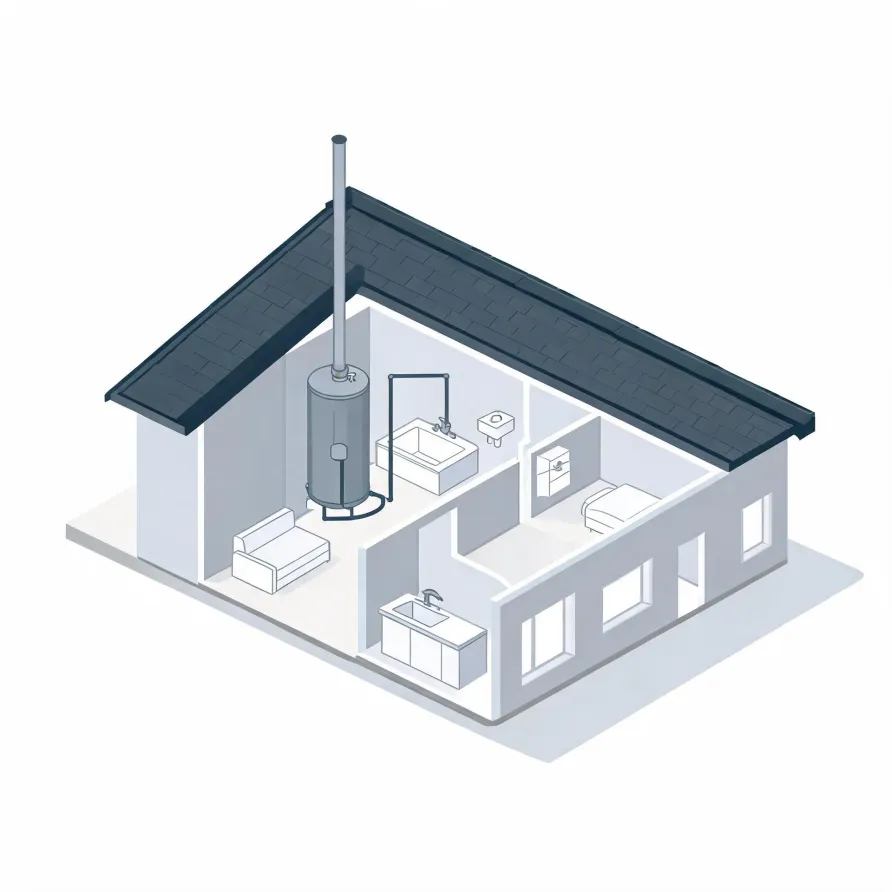
The storage tank is the piece a homeowner notices first. It sits in a utility closet, basement, or garage and holds a supply of water kept ready at temperature. Attached to the tank are the inlet and outlet connections, which bring cold water in and send hot water out to the rest of the house.
The pressure relief valve mounts directly on the tank and opens if pressure inside climbs too high. A dedicated supply line runs to the tank from the home's cold water plumbing, and a discharge pipe carries away anything the relief valve releases. In gas-fired units, a flue pipe exits the top of the tank and vents combustion gases outside.
The drawing shows a typical layout, and a licensed contractor determines exactly what applies in your home.
Find a contractor in Columbia CountyColumbia County, Oregon, by the numbers
2 severe weather events were recorded in Columbia County, Oregon between 2015 and 2024.
NOAA National Centers for Environmental Information, Storm Events Database, bulk CSV export, events 2015-01-01 through 2024-12-31.Half the homes in Columbia County, Oregon were built in 1981 or earlier (2020-2024 ACS 5-year).
U.S. Census Bureau, 2020-2024 American Community Survey 5-Year EstimatesColumbia County, Oregon holds 22,167 housing units (2020-2024 ACS 5-year).
U.S. Census Bureau, 2020-2024 American Community Survey 5-Year EstimatesOwners occupy 76.1% of the occupied homes in Columbia County, Oregon (2020-2024 ACS 5-year).
U.S. Census Bureau, 2020-2024 American Community Survey 5-Year Estimates