Tell us about the job
Takes about a minute. No obligation.
Gas water heater replacement in Washington County starts with the venting, not the tank. Utility gas heats more occupied homes in Washington County, Oregon than any other fuel, at 50.1% (2020-2024 ACS 5-year). That share means most homes here were built around gas combustion, and the flue, the draft hood, and the combustion air supply all carry assumptions from the original install. When a contractor swaps an older unit for a new one, they check whether the existing vent connector meets current code for the replacement's BTU input and exhaust temperature. A high-efficiency condensing unit, for instance, vents through PVC rather than a metal flue, and the old chase cannot simply be reused.
Ductwork and electrical service sized for earlier equipment do not always match what a new water heater draws or vents, and in a county where aging stock is the norm, that gap is where installation jobs get complicated. Half the homes in Washington County, Oregon were built in 1990 or earlier (2020-2024 ACS 5-year). A contractor quoting a water heater replacement here opens the job by checking what the existing runs and connections actually are, because the house has likely been through at least one equipment change already and the infrastructure may reflect that history in ways the original layout does not. What they find in the walls and the utility space sets the scope.
What a Water Heater Installation Covers
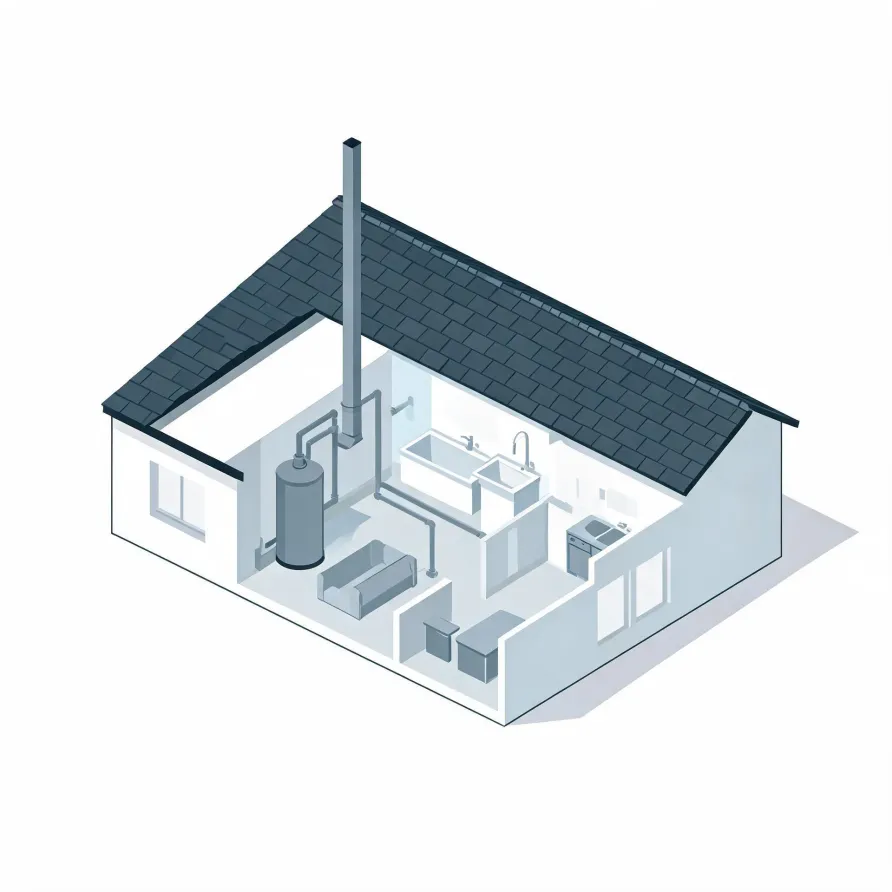
The tank is the piece most homeowners recognize first. It sits in a utility closet, basement, or garage and holds the supply of heated water the house draws from. Above or beside it, the burner assembly or heating element does the actual work of raising that water to temperature.
The pressure relief valve mounts directly on the tank and releases if pressure climbs too high. The supply and outlet pipes connect at the top, one bringing cold water in and one sending hot water out to the fixtures throughout the house. A drain valve at the base of the tank allows a contractor to flush sediment or fully empty the unit when the work calls for it.
The drawing shows a typical layout, and a licensed contractor determines which components apply and how they are configured in your specific home.
Get matched in Washington CountyWashington County, Oregon, by the numbers
7 severe weather events were recorded in Washington County, Oregon between 2015 and 2024.
NOAA National Centers for Environmental Information, Storm Events Database, bulk CSV export, events 2015-01-01 through 2024-12-31.Half the homes in Washington County, Oregon were built in 1990 or earlier (2020-2024 ACS 5-year).
U.S. Census Bureau, 2020-2024 American Community Survey 5-Year EstimatesWashington County, Oregon holds 243,278 housing units (2020-2024 ACS 5-year).
U.S. Census Bureau, 2020-2024 American Community Survey 5-Year EstimatesOwners occupy 60.8% of the occupied homes in Washington County, Oregon (2020-2024 ACS 5-year).
U.S. Census Bureau, 2020-2024 American Community Survey 5-Year EstimatesRules and Standards Governing Water Heater Installation in Washington County, Oregon2 sourced rules and standards
What Washington County, Oregon Requires for HVAC Installation
Oregon’s contractor licence does not reach casual, minor or inconsequential work on one structure where the person’s contracts total less than $1,000 — and the exemption is unavailable to anyone who advertises or signs themselves as a contractor, at any price.
Oregon requires a current Construction Contractors Board licence, with the right endorsement, to undertake, offer to undertake or bid construction work.