Why your water heater makes popping noises in Oregon
Once you send the form, finding a pro is off your list.
That popping sound is sediment, settled at the bottom of the tank and getting trapped under a layer of scale. Water gets under it, heats up fast, and turns to steam. The pop is that steam breaking loose. Most homes in Oregon heat water with electricity, and the lower element sits right down in that sediment, so it has to push its heat through the buildup to reach the water above it.
Left alone, that element works harder than it should. It can still fail even though power here isn't expensive, because the strain is mechanical, not just cost. Heat cycles through scale instead of water, and over time that wears on the element itself.
A plumber who works on tanks all over Oregon has seen this exact tank, this exact noise, more times than you have. They know whether it's a flush that clears it or an element that's already stressed past the point of saving. You won't be the one tracking that down. Send the request and the search for someone is off your plate. It's one licensed plumber local to you, not a string of companies calling back, and they're the one who already knows what a popping tank in an Oregon home usually means before they even look at it.
The noise won't damage anything by itself tonight. But it doesn't fix itself either, and tanks that pop now tend to get louder, not quieter. Below, there's more on what's actually happening inside the tank and what a fix usually involves. When you're ready, the request takes a minute and the rest is handed off.
Why does my water heater make popping noises?
You hear popping or rumbling coming from the tank, usually when the heater is running. It's not a sound you remember hearing when the water heater was new, and it makes you wonder whether something is wearing out or about to fail.
It's sediment buildup, and it gets louder as more collects
Electric water heaters, which is what most homes in Oregon have, sit on lower elements that run directly under where sediment settles. As that layer builds up over the years, the popping shows up more often and sometimes gets louder. It doesn't mean the tank is about to fail, but it does mean the element is working harder than it should to heat water through that layer. Left alone, that extra work shortens how long the element and the tank itself hold up. A plumber can flush the tank to clear the sediment, or check whether the buildup has already damaged the lower element.
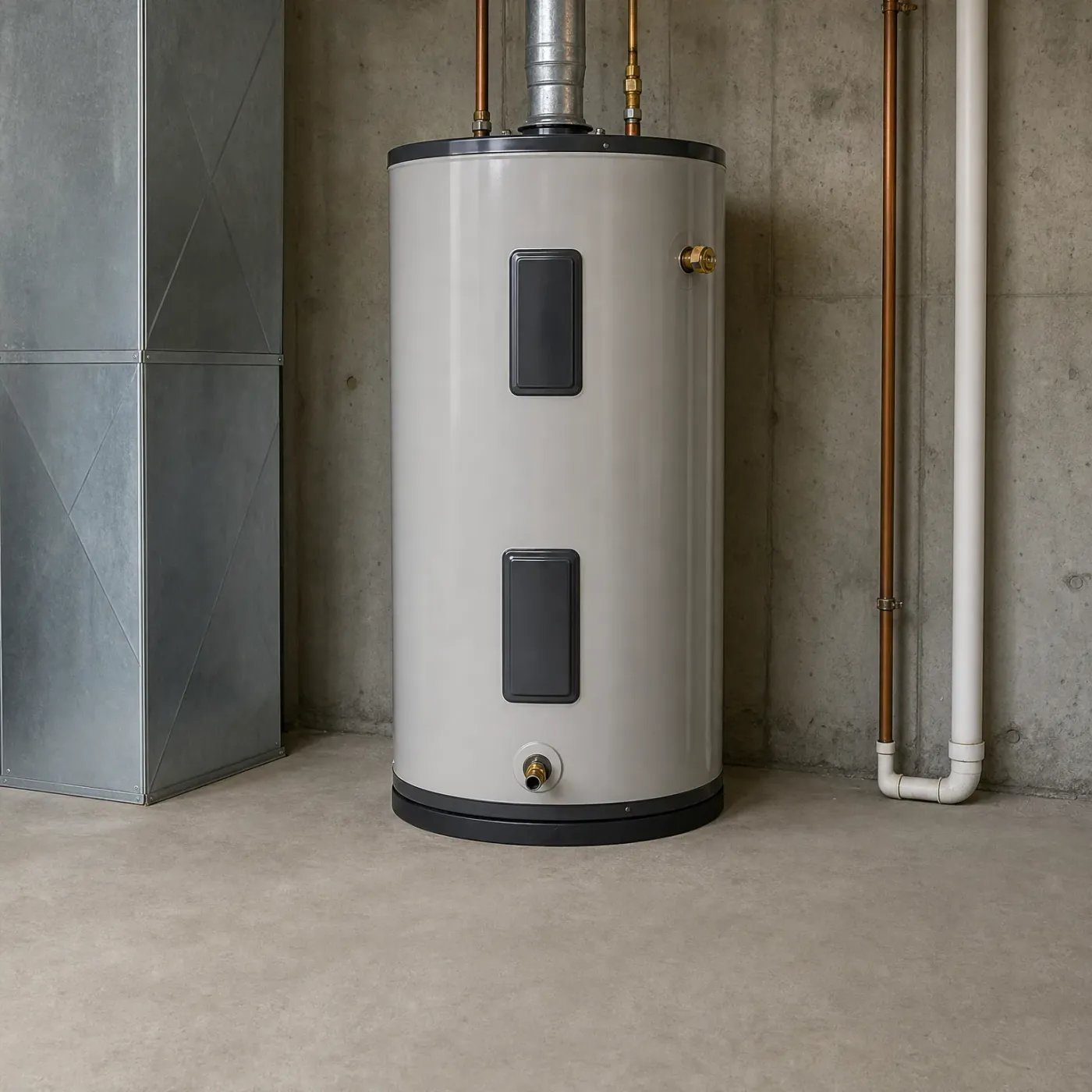
A tank that's still just working
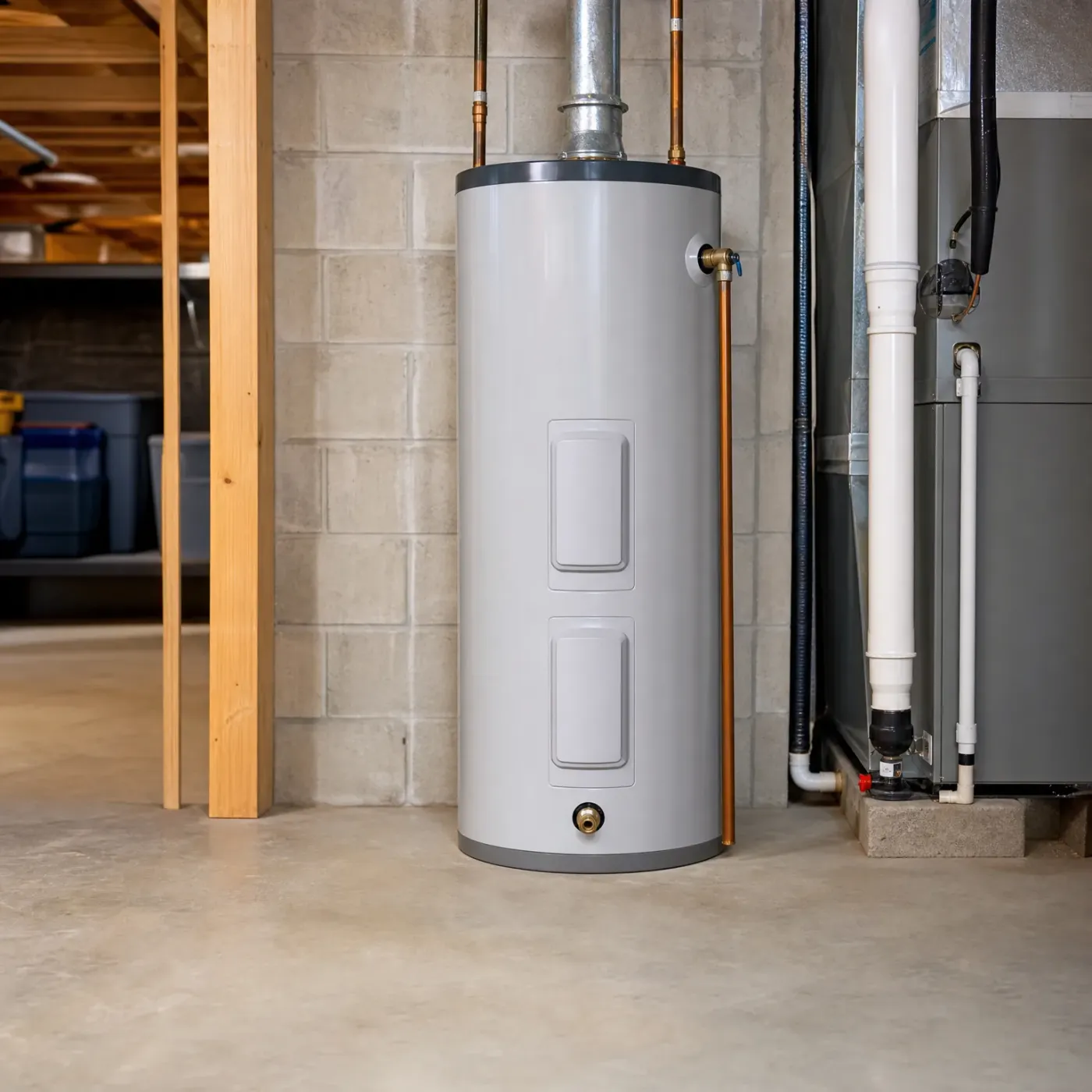
This is what a water heater looks like when sediment hasn't built up yet. The tank is clean, the fittings are tight, and there's nothing for the water to pop around. Keeping it this way is a matter of flushing the sediment out before it has a chance to harden into scale.
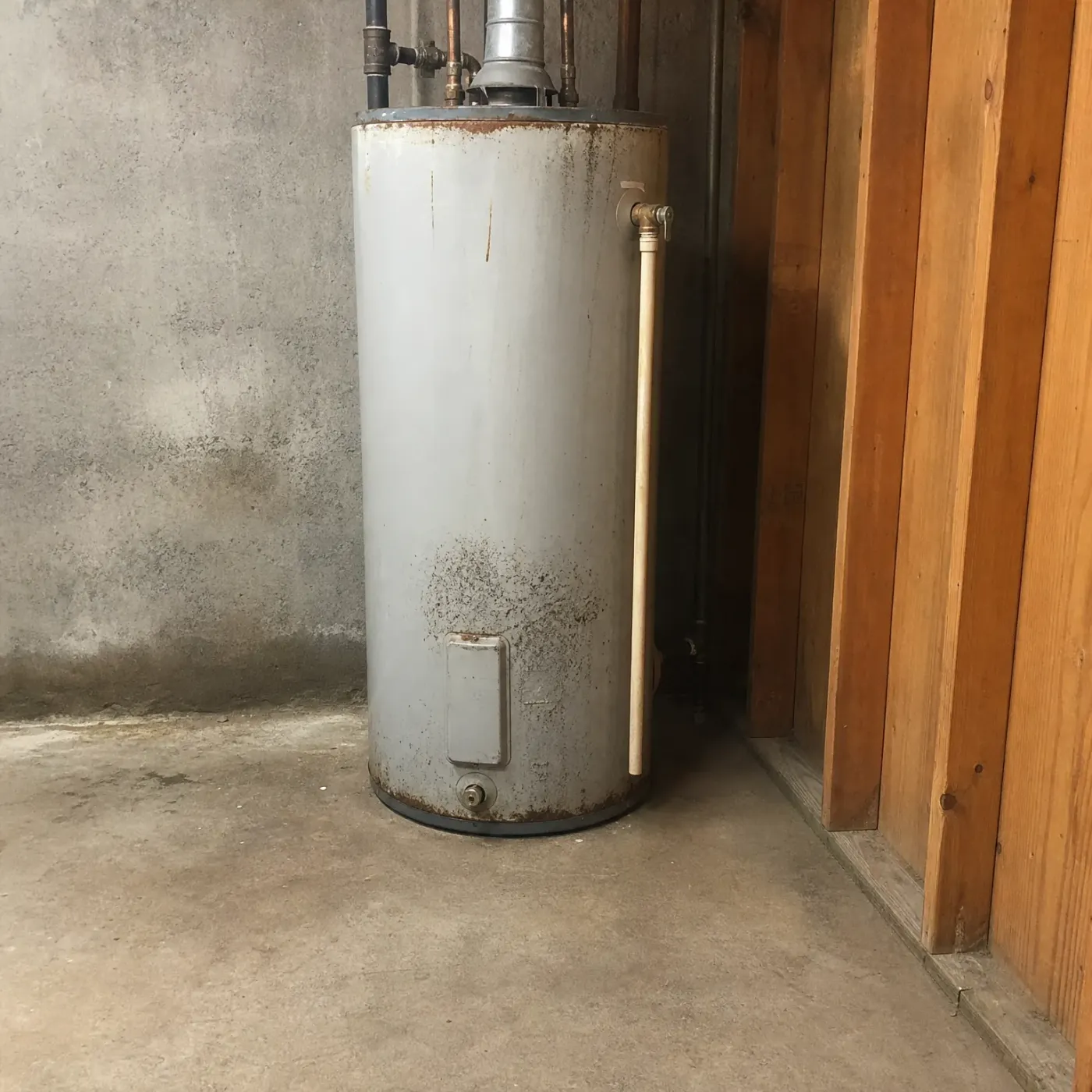
A tank that's been popping for a while
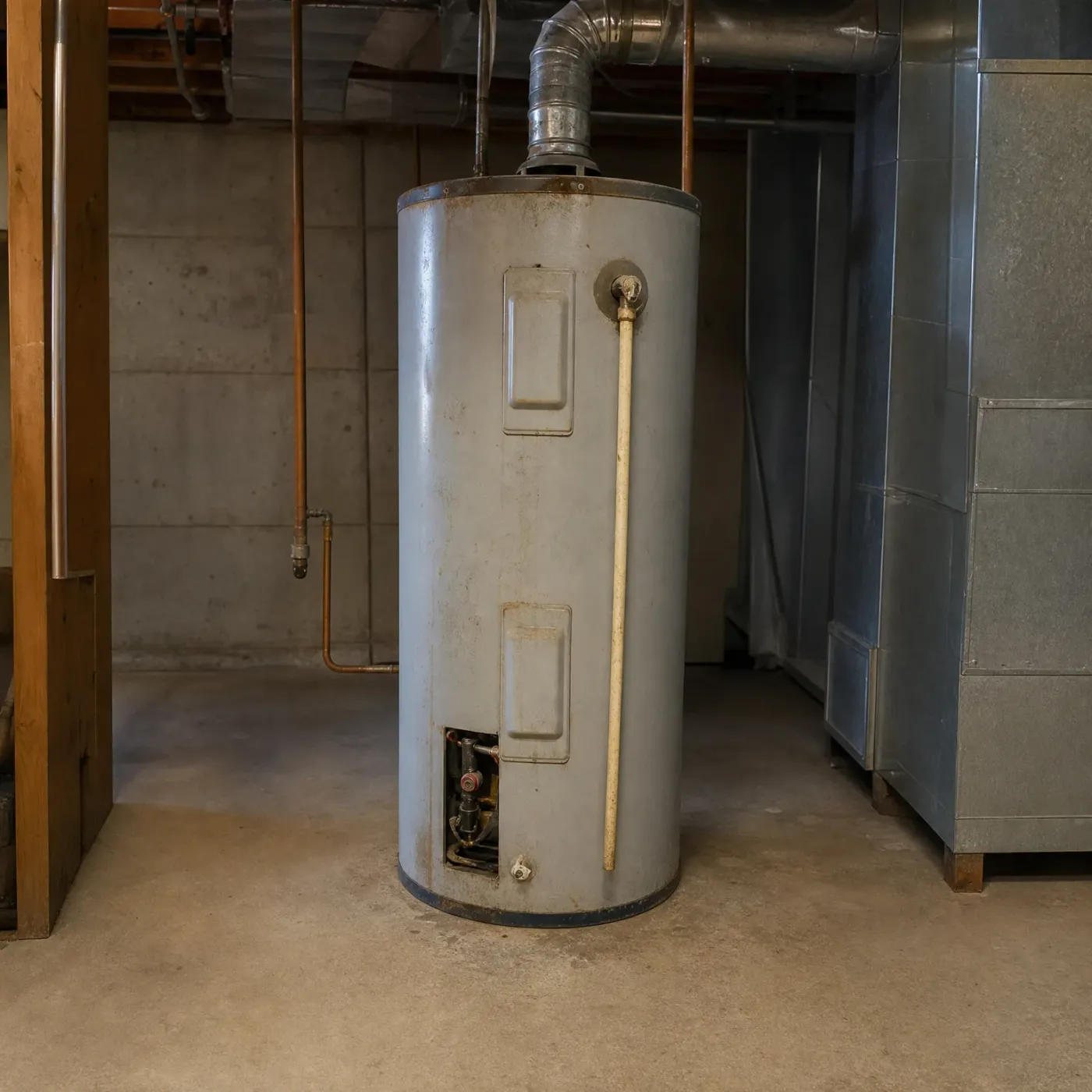
Rust on the outside often means wear on the inside too. That discharge pipe on the relief valve is worth watching, since a tank under strain can start venting there. A unit in this shape is past the point where flushing it out solves the problem.
Flush the Tank or Replace It
Flush it
A contractor drains the tank and clears the loose sediment sitting at the bottom before it hardens into scale.
The popping quiets down because there's nothing left for the water to trap and boil under.
It's a service call, not a repair, and it buys the tank more years running the way it did when it was new.
Electric water heaters in Oregon still build up sediment the same as any tank, since flushing depends on the water, not the fuel source.
If the popping is new and the tank is younger, this is usually where a technician starts.
Skipping it doesn't stop the buildup, it just lets the scale get thicker and harder to clear out later.
Replace it
If the sediment has baked into a hard layer of scale, flushing won't remove it and the popping comes back.
A tank that's old enough to have this much buildup is also old enough that the heating element underneath is working harder than it should.
Scale sitting on an electric element traps heat against it, and that's what tends to burn an element out early.
Replacement makes more sense once a technician has looked at the tank's condition, not just listened to the noise.
A new tank starts clean, so the popping stops because there's no scale left to trap water under.
Someone who services water heaters every season in Oregon can tell early on whether a flush will hold or whether the tank's past that.
Your request goes to one pro, not a list of companies.
You're not committing to anything by asking.
Why electric elements take the hit
An electric water heater has a heating element sitting low in the tank, right where sediment collects. As that layer builds up, the element has to work through it to heat the water above it, and that's where the popping starts. Gas units pop too, since sediment settles the same way no matter what heats the tank, but an electric element sits inside the buildup instead of below it. Over time the element can burn out faster than it should, not because it's failing on its own, but because it's working through scale instead of water.
What a quiet tank sounds like
A water heater that's been flushed on schedule runs close to silent. Water moves through the tank, heats, and comes out the other end without anything to catch or trap underneath it. If you've had the tank flushed before and the popping came back within a year or two, that's worth mentioning to whoever looks at it, since it points to how fast sediment is building up in your water rather than a one-time problem. Oregon water varies by area, and that's part of what decides how often a tank needs attention.
Left alone
The popping gets louder as the scale thickens. The element underneath keeps working harder to push heat through it, and electric elements fail under that strain before they should.
A contractor clears the sediment and looks at the element while the tank's open. You get a quieter tank and a straight answer on what shape that element is in.
Before you get your water heater repairAfter you get your water heater repair
1
Sediment settles and hardens into a layer of scale on the tank floor.
2
The electric element heats from below, right against that layer.
3
Water seeps under the scale and gets trapped against hot metal.
4
Trapped water flashes to steam faster than it can escape.
53.5% of homes statewide heat with electricity
With more than half of Oregon homes running on electric water heaters, yours is likely heating from an element low in the tank, right where sediment settles first. That's the spot where popping starts.
ACS 2020-2024 5-year B25040
Tank still working fine
This is a water heater before sediment becomes a problem. The panels sit flush, the drain valve is tight, and the pipes along the wall carry water in and out without any strain on the tank itself. Nothing underneath is fighting through scale yet.
Tank past that point
Rust has taken hold here, and the staining near the bottom shows heat working against buildup for a long time. The relief valve and discharge pipe are still doing their job, but a tank corroded like this is past what a flush alone fixes. A contractor needs to look at it before it fails outright.
The popping is sediment trapped under scale on the tank floor, and it won't quiet down on its own. A flush clears it out, and if the element's already damaged, that gets replaced too. Either way, it's worth having someone look who works on electric water heaters in Oregon homes regularly and knows how fast scale builds up on an element that's been running under it. One contractor, local to you, takes the call, looks at what the sediment has done, and tells you straight whether a flush solves it or the element needs to come out. No guessing which of several companies to deal with, no explaining the problem more than once. The noise has an answer, and now you know what it is.
Hand off the search today
Only one pro gets your request, so you hear from one company.