Profile view of a bearded man wearing a black baseball cap and a dark gray T-shirt against a plain light background.

Why your water heater is leaking in Oregon

Step 1 of 3: Equipment

A leaking water heater usually means the tank itself has rusted through on the inside, or a fitting on top has come loose or corroded. Tanks last so many years before the steel lining wears out, and once that happens, water finds a way through the shell. You might also see water from the pressure relief valve, which opens on its own if pressure inside builds too high, or from a loose drain valve near the bottom. Since most homes in Oregon run water heaters on electricity, a leak near the base can also come from the heating element gaskets rather than the tank. If the leak is coming from the tank itself, there is no sealing it. That tank is done and needs to be replaced. If it is a fitting, valve, or gasket, it can often be repaired. Either way, water pooling at the base is worth addressing quickly, since it can damage flooring and whatever is stored nearby.

A woman with shoulder-length brown hair wearing a beige knit cardigan sits in a gray upholstered armchair near a window, looking off to the side with a slight smile, with bookshelves blurred in the background.
A woman and a sleeping child wrapped together in a cream knitted blanket on a couch, with a potted plant, framed photo and lit lamp in the background.
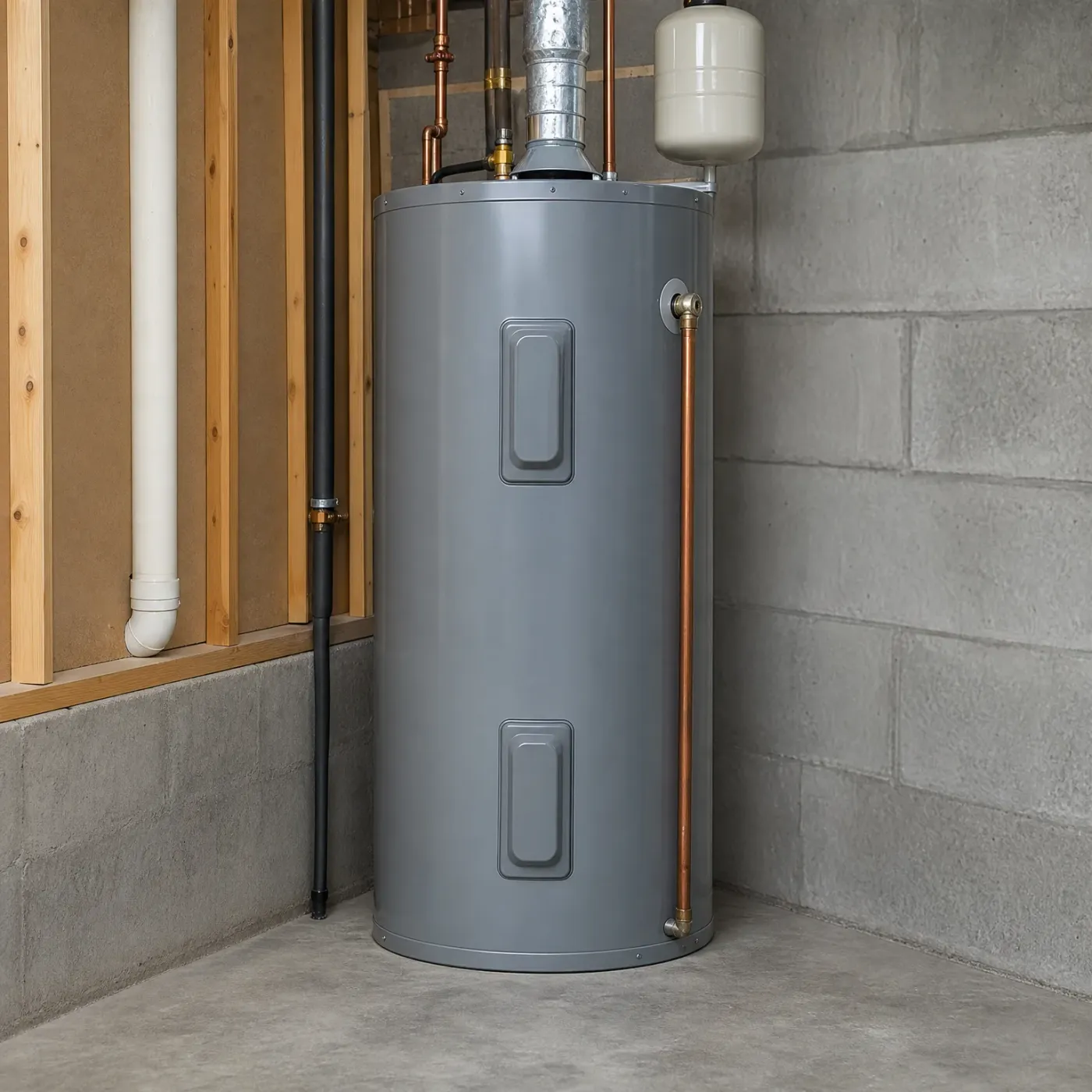
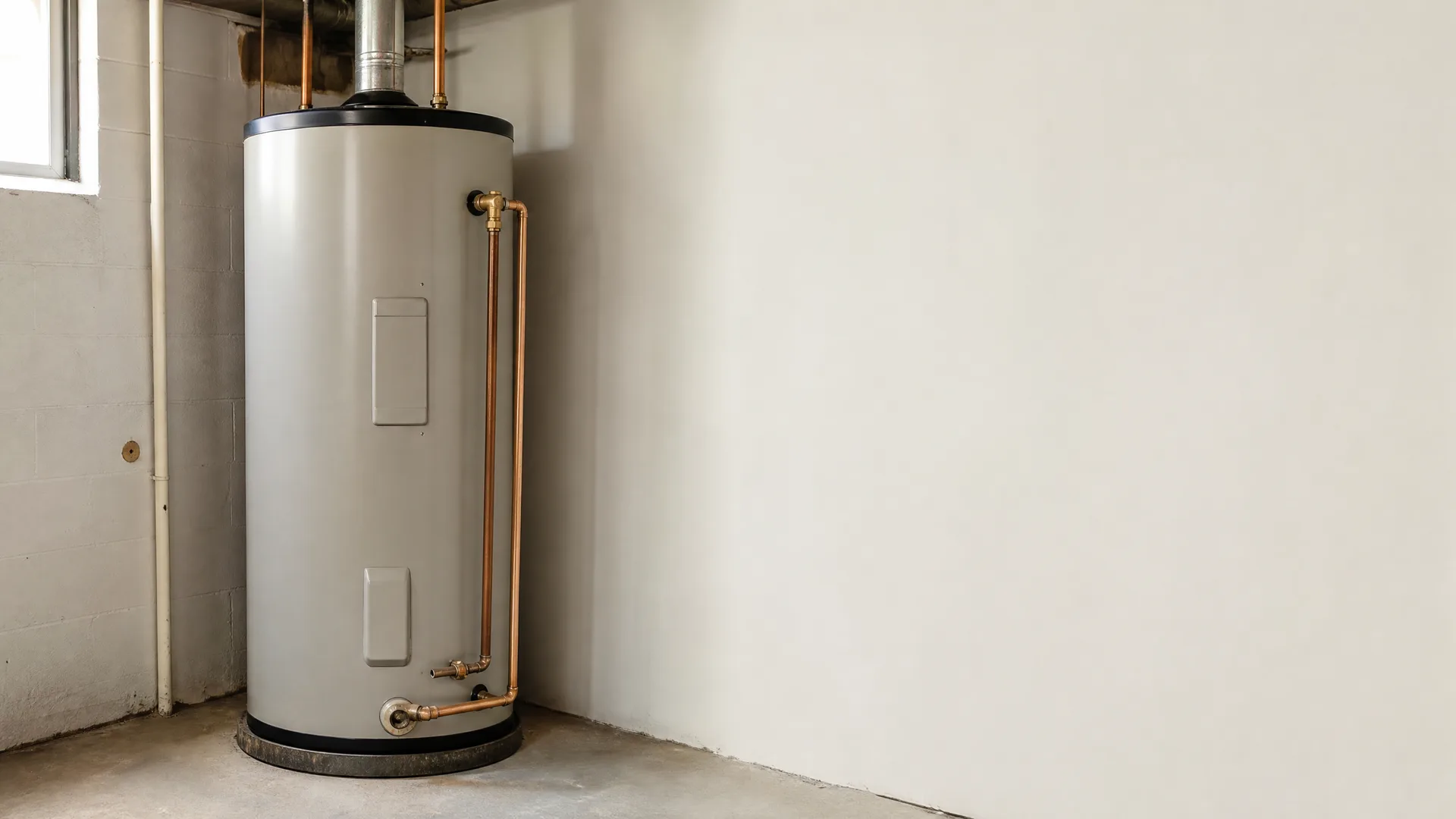
A gray cylindrical water heater with copper piping and an expansion tank stands in a basement corner beside a concrete block wall and exposed wood framing.

No leak, just upkeep

A water heater like this one is doing fine. The fittings are tight, the drain pipe and expansion tank are doing their job, and the tank itself isn't showing any sign of water where it shouldn't be. Most electric water heaters run like this for years without a drop out of place.
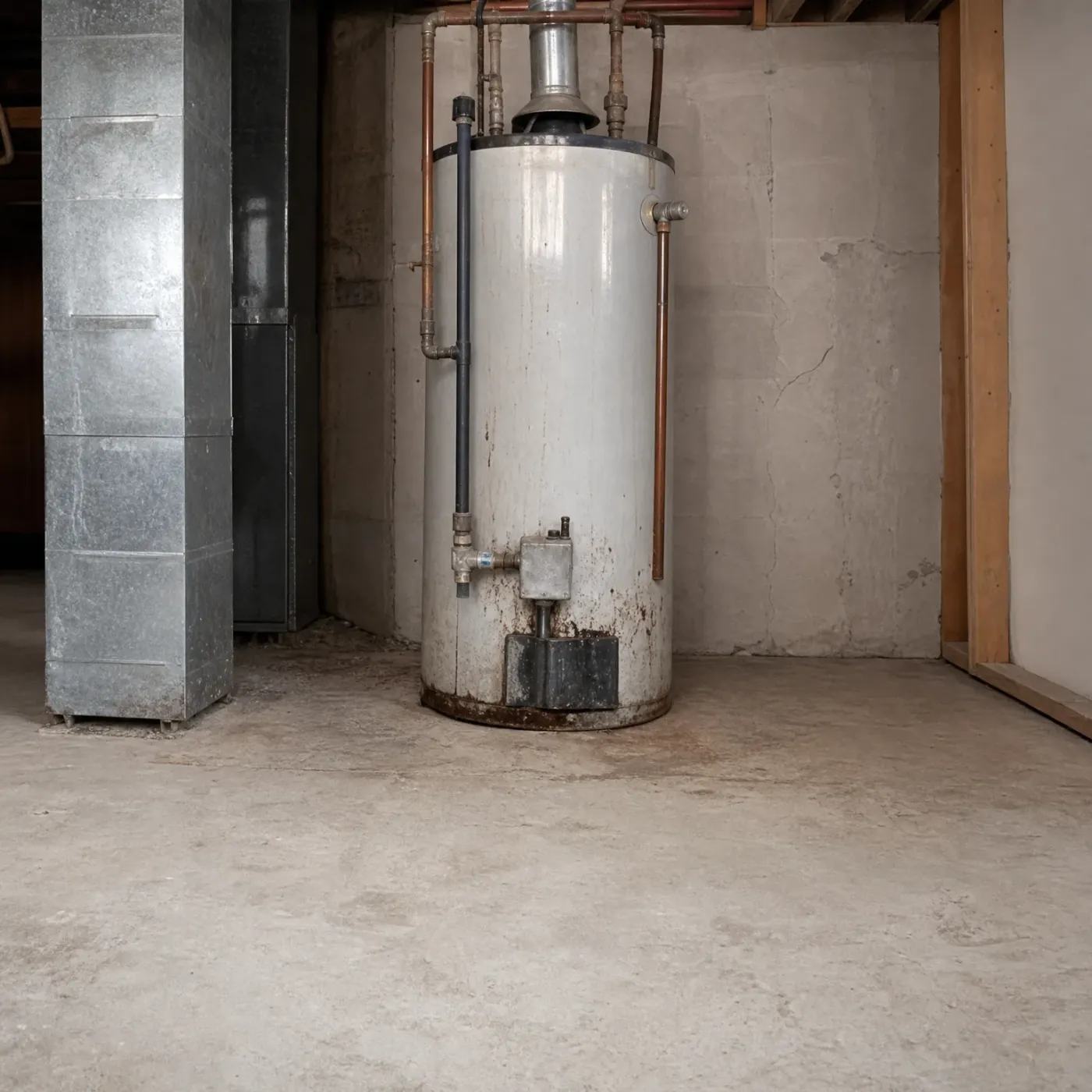
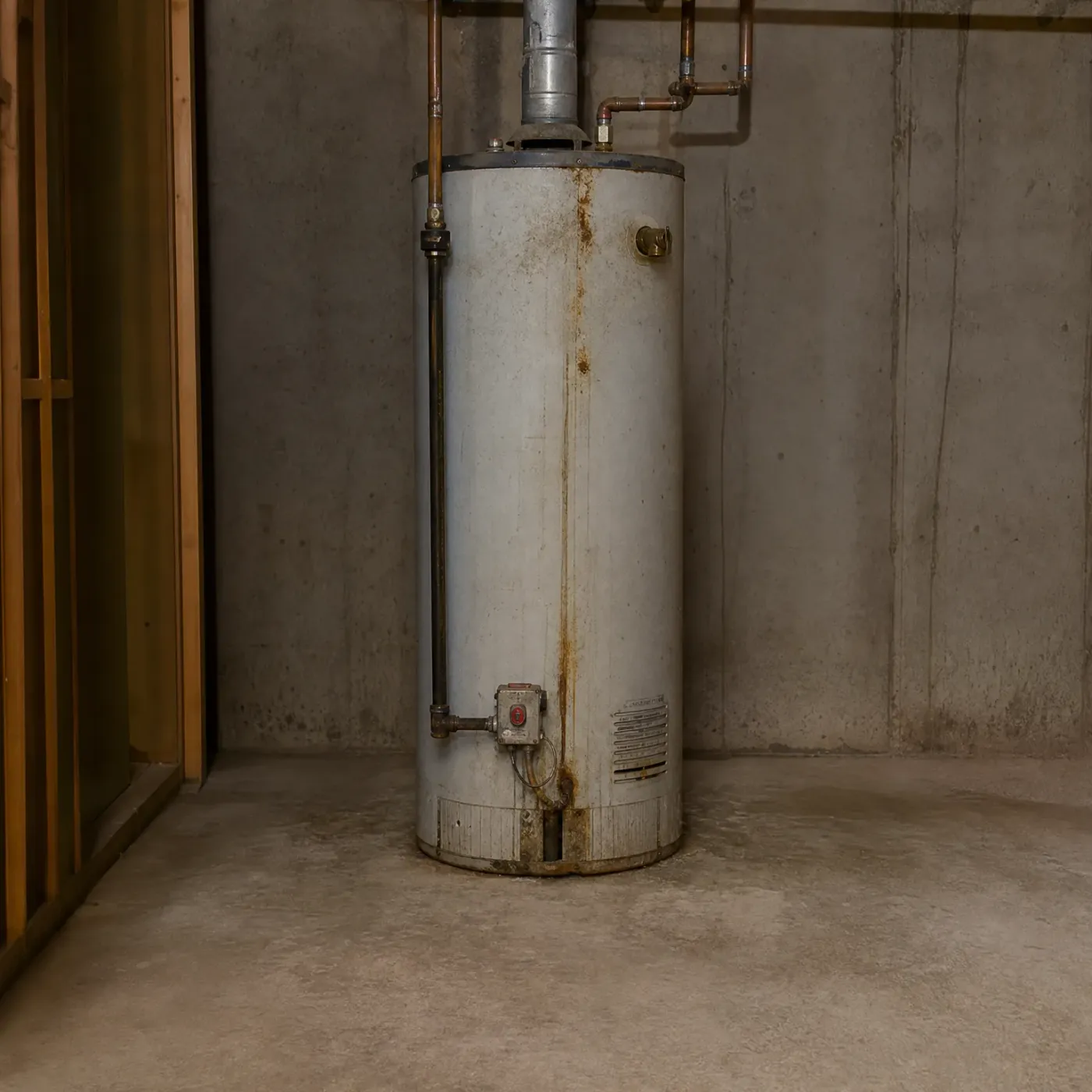
An old rusting cylindrical gas water heater with copper and steel pipes and a flue stands against a concrete basement wall beside metal ductwork on a bare concrete floor.

Rust and old age

This tank has been corroding for a while. The rust and mineral buildup on the outside usually mean the steel inside is worn through too, and that's when leaks start. A water heater this old, sitting next to the furnace, is past the point where a repair holds for long.

Fitting Leak or Tank Leak

Leak from a fitting

  • Water shows up around a connection at the top of the tank, where the inlet, outlet or a drain valve threads in.
  • The tank itself holds, so tightening or replacing the fitting usually stops the water.
  • A loose fitting can happen on a water heater of any age, not just an old one.
  • The pressure relief valve can also drip on its own if it's worn or set off by pressure that's built up in the tank.
  • A contractor can check this in minutes by drying everything off and watching where the water reappears first.

Leak from the tank

  • Water comes from underneath the tank itself, or seeps out through a seam in the steel shell.
  • This means the lining inside has rusted through, and no fitting or valve is going to fix that.
  • Once the tank is leaking this way, it's done. Electric or gas, the steel doesn't patch.
  • You'll often see rust-colored water or a reddish stain trailing down from where the leak starts.
  • A contractor can confirm it's the tank and not a fitting, since a replacement is the only path from here.
A tall gray cylindrical water heater with copper piping and a flue stands in the corner of an empty basement room with concrete block and painted walls.

Why the tank rusts from inside

A steel tank holds up because of a glass lining baked onto the inside and a rod built to corrode first, in the owner's place. Once that rod is used up, the water starts working on the bare steel. Oregon water does its part too, and electric elements sit right down in the tank where any weak spot in the lining will show up first. There's no patching a tank once it's rusted through. A fitting gets replaced. A tank gets replaced too.

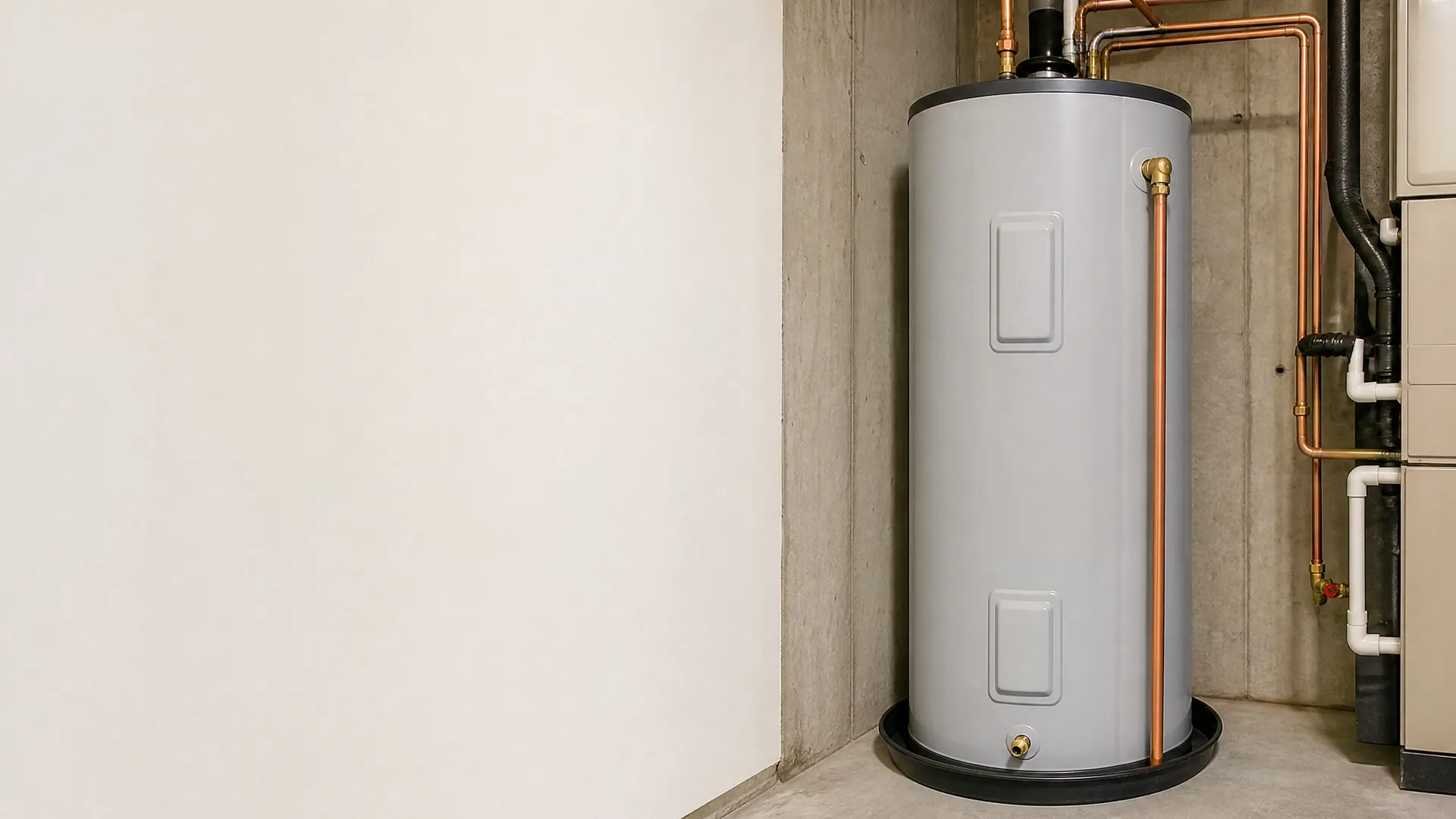
A gray cylindrical water heater stands in a drain pan against a concrete wall, with copper and white pipes running along the wall to the right and a plain light wall on the left.

What the drain valve and TPR tell you

The drain valve at the bottom and the temperature and pressure relief valve near the top are both built to be opened, not just left alone. A slow drip from either one after it's been used usually means the seat didn't reseal, and that's a part, not the tank. But if the TPR valve is letting go on its own, that's the tank telling you something about pressure or heat it shouldn't need to handle. That one's worth having looked at soon.

What are you seeing around your water heater right now

Look for water pooling under the tank or a damp spot on the floor nearby that keeps coming back after you wipe it dry. Check the top for moisture around the pipes going in and out. A drip from there feels different than water seeping from underneath the tank itself, and it matters which one you have. You might also notice a faint metallic smell near the unit, or rust color in the water when you run a hot tap. If the tank is the source, the leak won't stop on its own and it tends to get worse. Left alone, it can soak the floor beneath it, ruin whatever is stored nearby, and run up your water use without you noticing right away.

A man with grey hair and stubble in a dark sweater sits on a grey sofa indoors, looking off to the side, with a potted plant and a sunlit window behind him.
A man with gray hair, a beard and glasses, wearing a dark green sweater, sits on a gray sofa in a sunlit living room with a potted plant, table lamp and wooden sideboard behind him.
A middle-aged man with graying hair and a short beard sits on a blue sofa in a living room, looking toward a window, with a bookshelf, lamp and framed picture in the background.
A man with graying curly hair and a dark green sweater sits on a gray sofa in a sunlit living room, looking off to the side, with a framed picture, shelving, an armchair and a window with sheer curtains behind him.

Matched to your water heater job

A water heater doesn't always tell you plainly whether it's a fitting or the tank itself. Sometimes the water travels along a pipe before it drips, so what looks like a leak at the base is really coming from a connection up top, and what looks minor turns out to be the tank. Figuring out which one you've got, and whether it's worth fixing or time to replace, isn't something you want to guess at while water keeps finding its way out. A licensed contractor working in Oregon sees this on electric water heaters all the time and knows what to check first. Getting matched means one contractor looks at your situation, not a handful of companies competing for the job. That's worth doing now, before a small drip from a fitting turns into a bigger problem, or before a failing tank does any more damage to the floor underneath it.

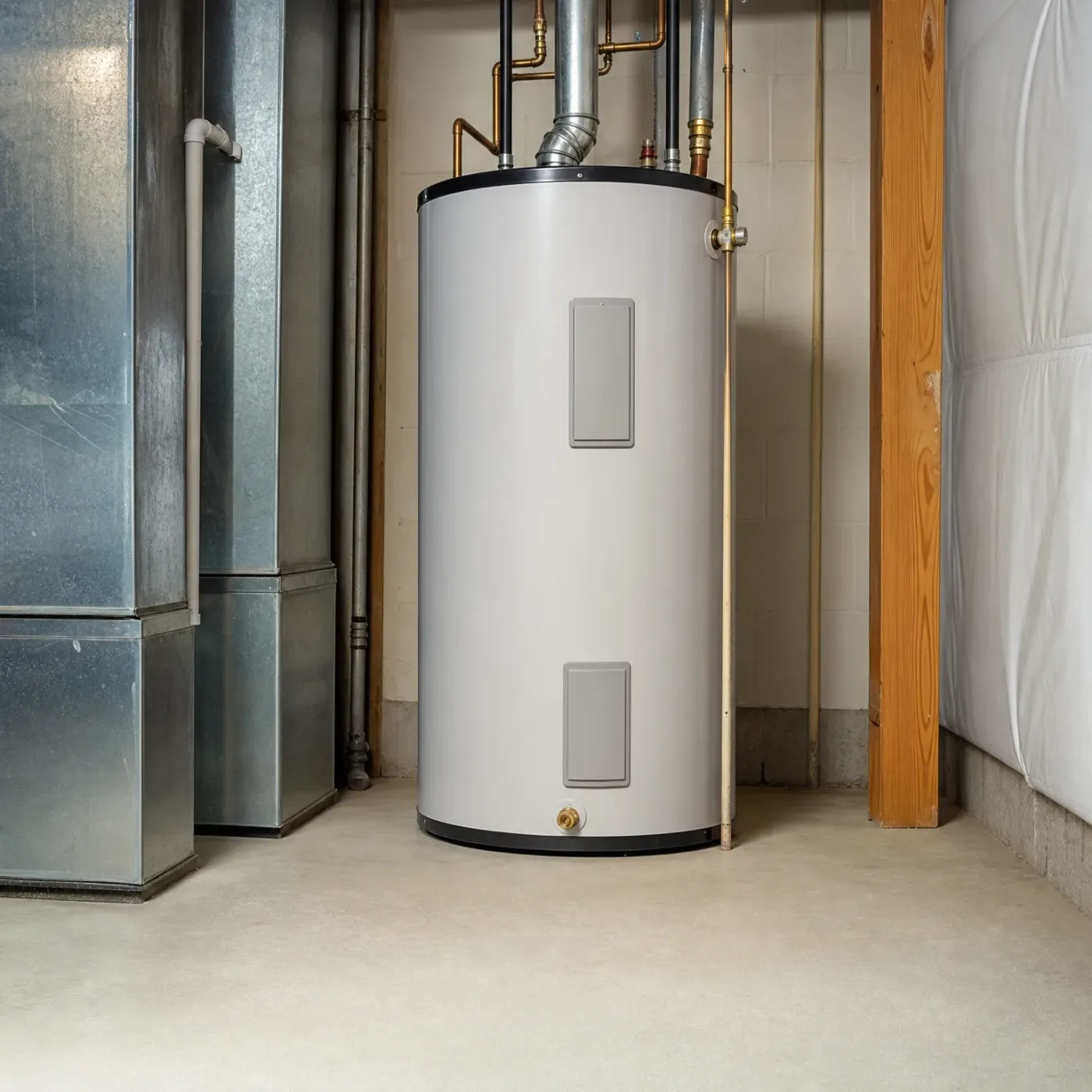
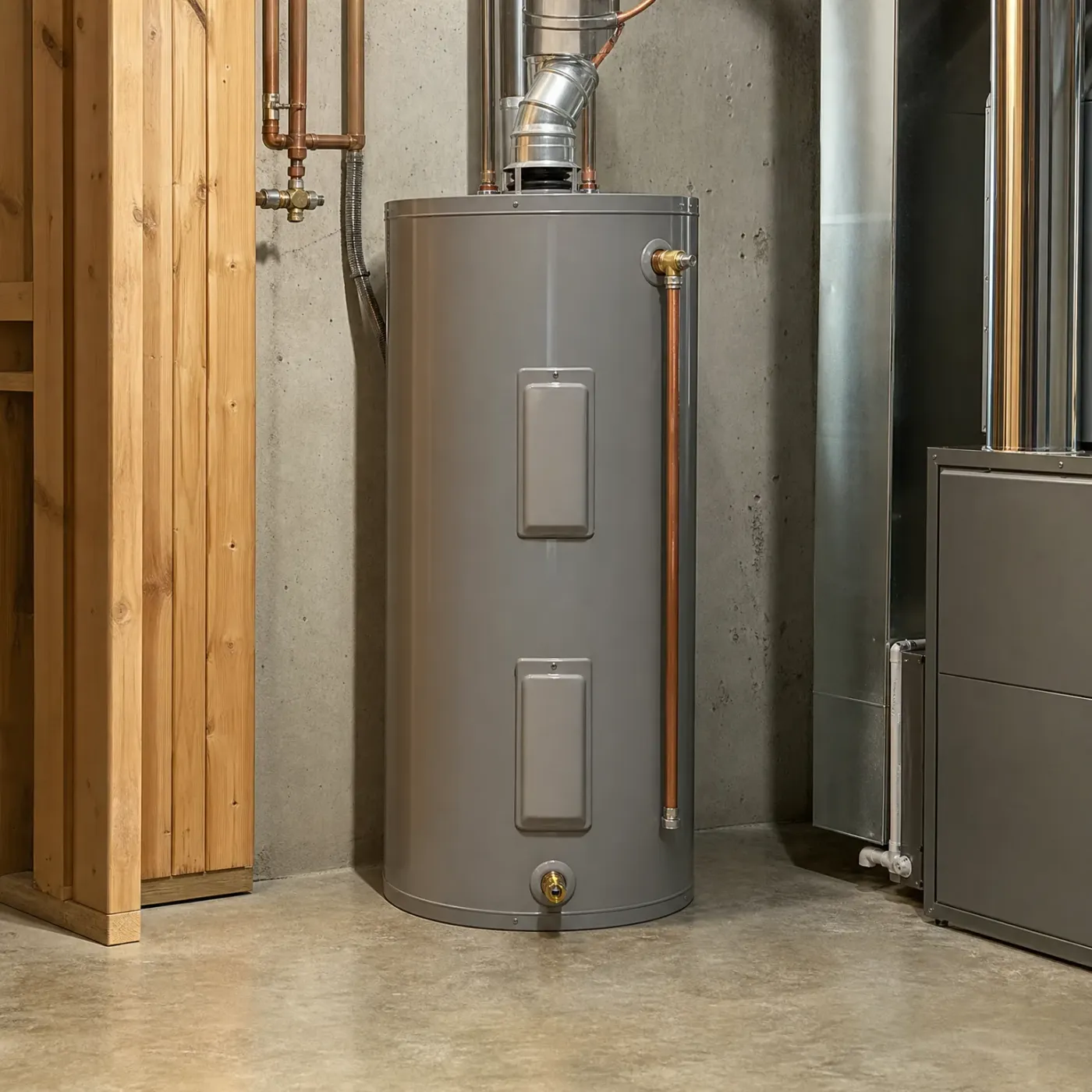
A white cylindrical water heater with two access panels stands on a concrete floor in a basement corner, beside galvanized ductwork, copper and metal pipes, a wooden post, and a concrete block wall.

Running the way it should

A water heater like this holds its water with nothing to see at the base or around the top fittings. The access panels, drain valve, and the copper and galvanized connections up top are all dry and sound. A unit in this shape just needs its anode rod checked on schedule so the tank keeps that protection.

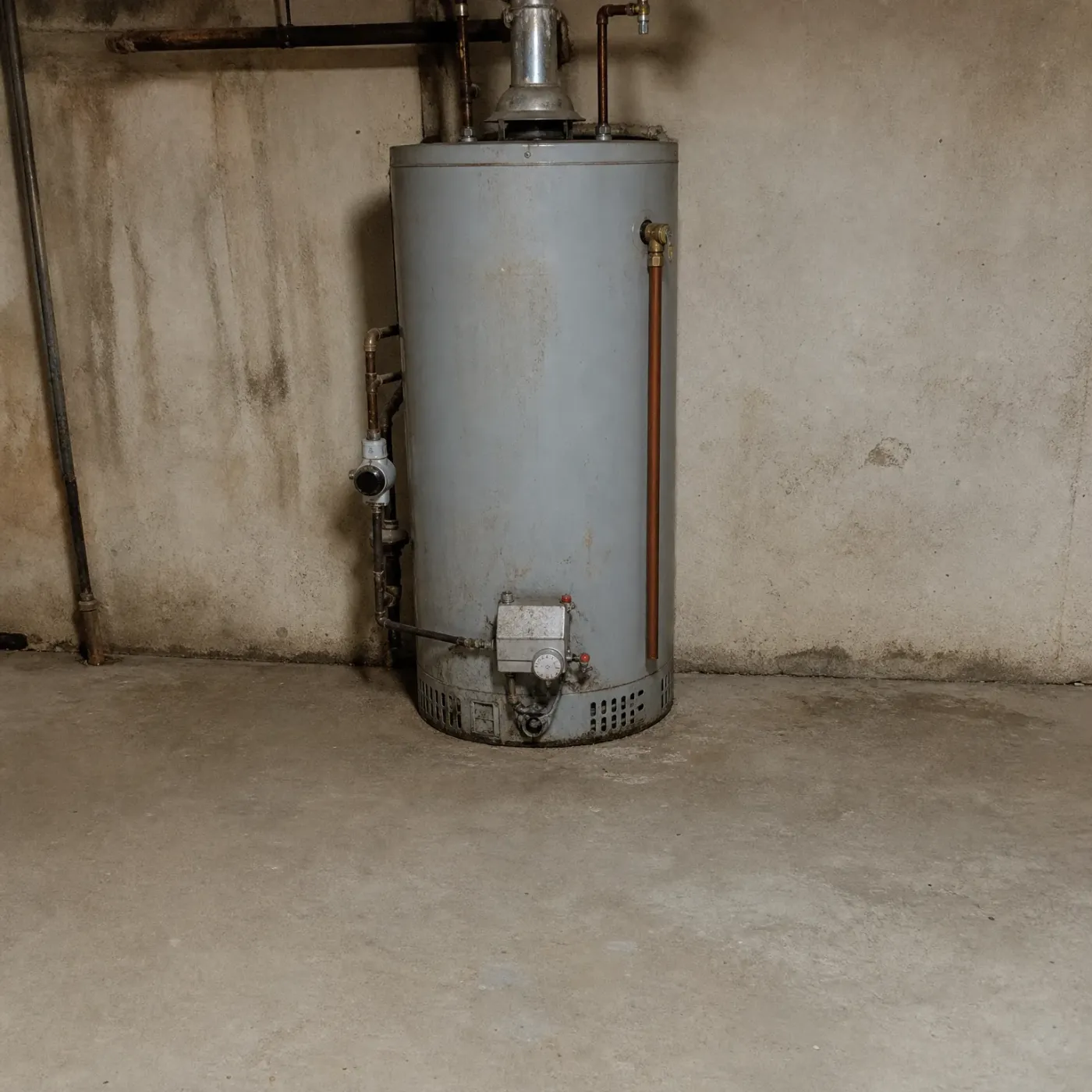
An older gray cylindrical gas water heater with copper and steel piping and a flue, standing on a concrete floor against a stained concrete wall.

Old tank, bare wall, no good sign

A gas water heater this old, sitting alone against bare concrete, is past the age where a lining failure gets likely. The pressure relief valve and gas control are original parts doing original work. Once a tank this age starts weeping, a local contractor who services these units regularly can tell you fast whether it's a fitting or the tank.

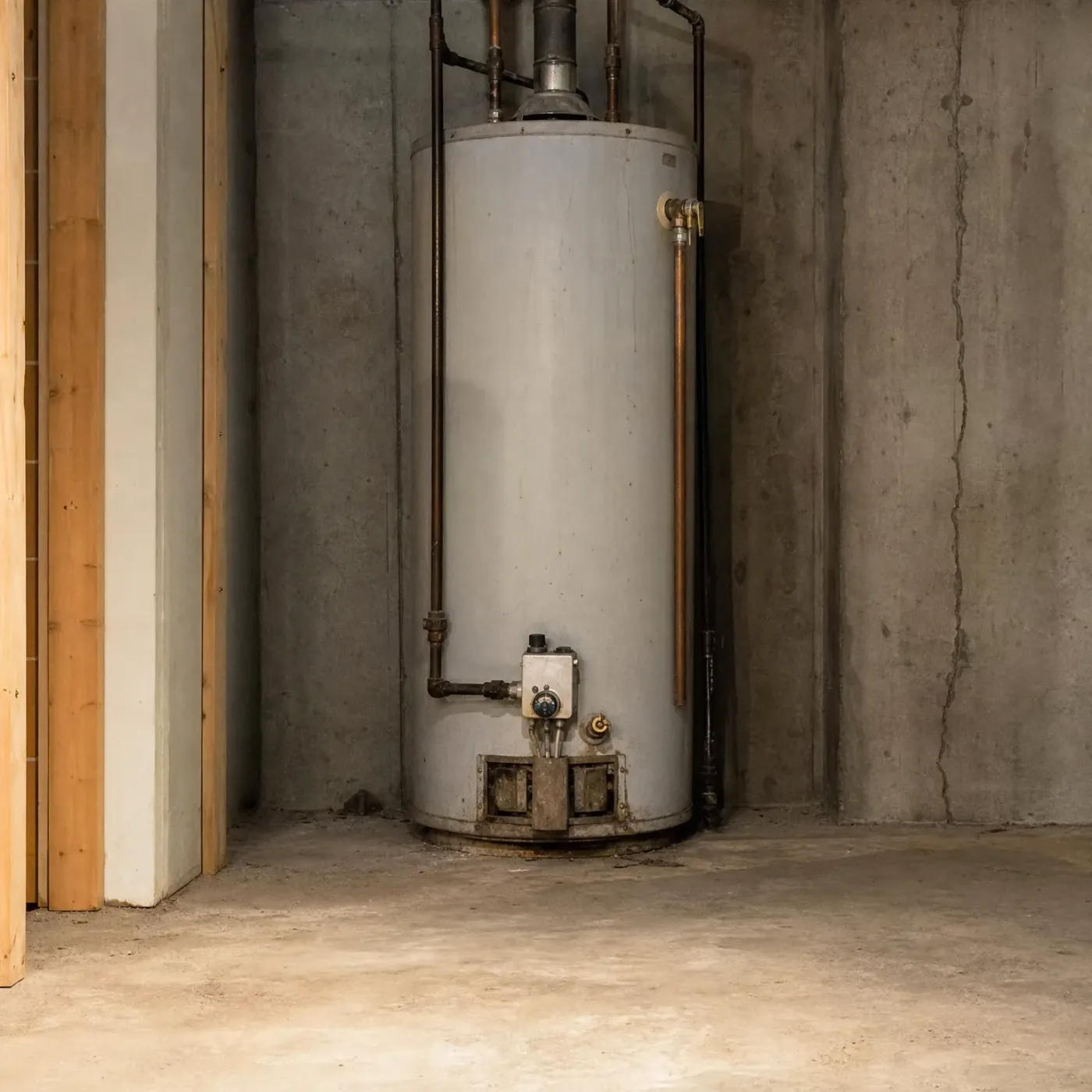
An older gas water heater with copper and black pipes stands in the corner of a bare concrete basement next to a wood-framed partition wall.
Before you get your water heater repair
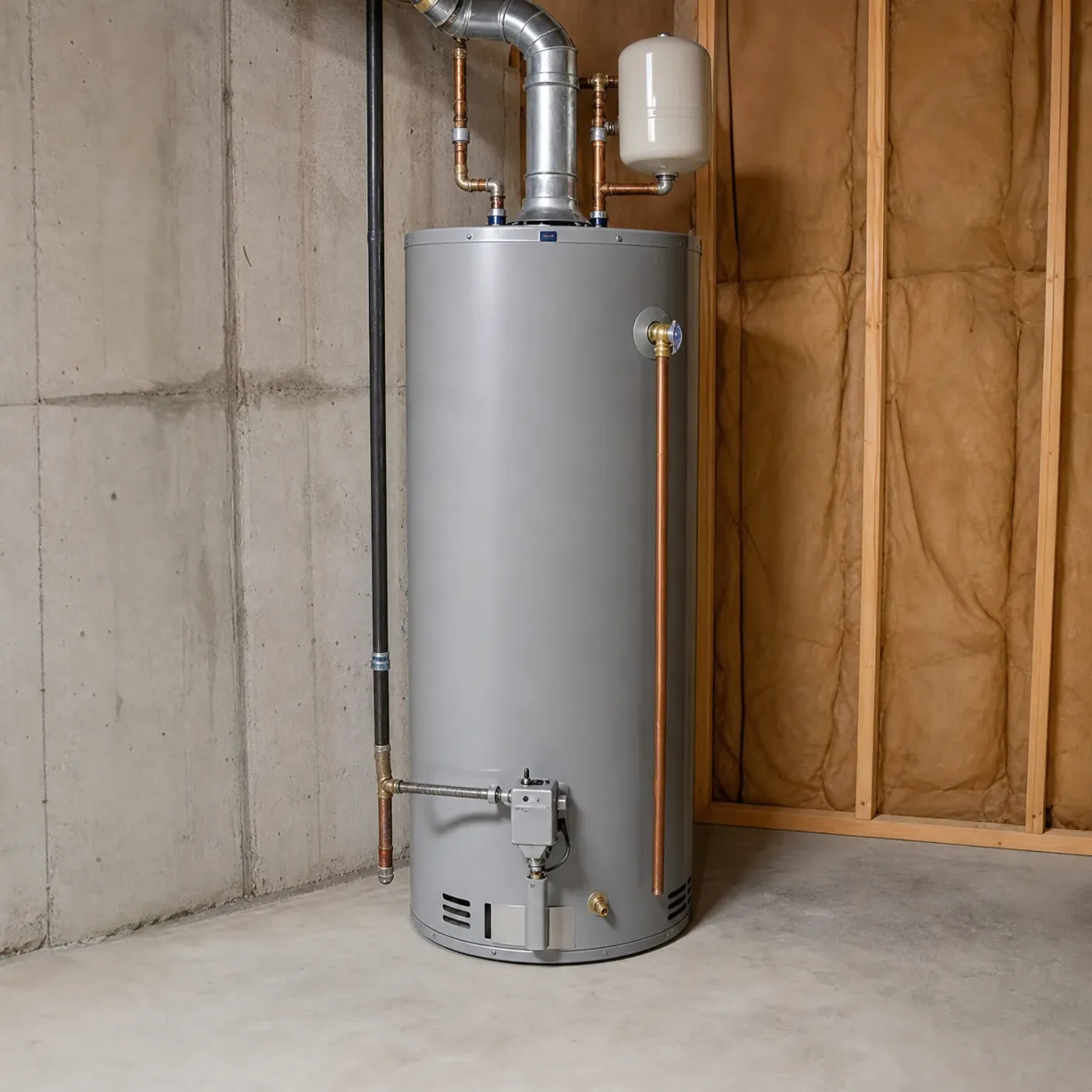
A gray cylindrical gas water heater with copper piping, flue vent, and a small expansion tank stands in a basement corner between a concrete wall and an insulated stud wall.
After you get your water heater repair

You keep topping off the pressure relief valve drip and figure it's normal for a tank this age. It keeps dripping because the pressure inside is too high for the valve to hold, and that doesn't fix itself.

A plumber checks the expansion tank and the water pressure coming into the house, since either one can push a relief valve past what it's built to handle. Once that's corrected, the dripping stops because the cause is gone, not because the valve got tightened.

53.5% of homes statewide heat with electricity

More than half the homes in Oregon heat with electricity, and that's almost certainly what's sitting in your utility closet or garage. Electric tanks still rust from the inside out and still leak at the fittings, so the fix depends on which one is happening to yours.

ACS 2020-2024 5-year B25040

A gray cylindrical water heater with two access panels and copper piping stands against a concrete wall in a basement, beside wood framing and metal ductwork.
A water heater like this one has a sound tank, tight fittings, and a flue drawing straight up through the vent.
An aging rust-streaked gas water heater with copper and galvanized pipes stands against a bare concrete basement wall beside wooden stud framing.
A rusted-through tank like this one is past patching. The fittings may still be tight, but the steel underneath isn't.
  1. A plumber shuts off power and water to the tank first.

  2. They check the fittings on top for looseness or corrosion.

  3. They trace any water along pipes to find the real source.

  4. They test the pressure relief valve and expansion tank.

A woman in a cream cardigan and jeans stands with one hand raised facing an open front door of a gray horizontal-siding house, with a black lantern wall light, a potted shrub with yellow flowers, and a stone-faced porch column.

A leak tells you where to look, not whether to wait

A water heater leaking in Oregon is either a loose fitting or a tank that's rusted through, and by now you have a sense of which one yours is. One stops with a wrench. The other means a new tank. Either way, the water isn't going to stop on its own, and a leak at the top can keep finding its way down until it looks like it's coming from somewhere it isn't.

A plumber who works on these year-round in Oregon can tell the difference fast, because they've seen the same fittings corrode and the same tanks give out in homes like yours. Getting matched with one means a local, licensed plumber looking at your situation specifically, not a call center sending your number to three different companies. You'll hear from one person, about your water heater.

A living room corner with a light beige sofa holding a textured taupe cushion, a large ceramic vase of olive branches by a window, a framed neutral artwork on the wall, and a dark bowl with stacked books in the foreground.
Kitchen corner with cream upper cabinets, oak lower cabinets, white marble-look countertop, beige tile backsplash, a ceramic vase of greenery, a wooden cutting board and bowl, and a black-framed window at right.
Interior corner of a room with a white-framed window and wide sill, beige walls with panel molding, a wooden cabinet holding a ceramic vase with a green leafy plant, and blurred shrubs and trees outside.
A wood-framed armchair with beige cushions and a woven lumbar pillow sits in a corner beside a large window overlooking green trees, with a tall ceramic vase holding leafy branches on the left and plaster walls and wood flooring.
Interior corner with a white-framed window above a sill, beige walls with baseboard molding, a greige shaker-style cabinet with brass knobs and a potted plant on top, light wood flooring and a woven jute rug.
A dark-framed six-pane window with white trim and sill set in gray horizontal lap siding, with hydrangea shrubs below and a white column and shingled roof section at left.

A water heater pro near you

Only one pro gets your request, so you hear from one company.

Find a local pro

It costs nothing to send, and you don't have to hire anyone.