

Why your hot water smells like rotten eggs in Oregon
Once you send the form, finding a pro is off your list.
Hand it offThat rotten egg smell is hydrogen sulfide gas, and it forms when bacteria in your water heater's tank react with the magnesium or aluminum anode rod inside it. Most homes in Oregon run on electric water heaters, and electric ones tend to run cooler than gas units, which gives that bacteria an easier time surviving in the tank. The smell is usually worse on the hot side only, since the bacteria live in the water heater itself, not in your cold water line. It is almost never dangerous. It is a nuisance, and a sign the anode rod or the tank water needs attention. A contractor can test the water, flush the tank, or swap the anode rod for one made of a different metal, which usually clears the smell for good. Left alone, it tends to come back worse, not better.

You turn the shower on and step back to let it run hot. The mirror stays clear. No steam climbs up like it usually does on a cold morning. Then the smell reaches you before the water does, that rotten egg edge rising with the warm air. Your towel is still on the rail where you left it last night. You lean in to check the water again, hoping it was just the first draw from the pipe, but it is still there on the second rinse. You turn the handle back to find a cooler setting, just to get through it, and make a note to deal with the tank before tonight.
Why does the smell only happen with hot water, not cold?
You've noticed the smell never shows up at the kitchen sink or when you run cold water to fill a glass. It's only there in the shower, or when you draw hot water for dishes. That pattern feels like it should mean something, and it does. It points straight at the tank itself rather than anything in your pipes or your water supply.
The smell only forms inside the tank, where the hot water sits
Cold water comes into your house straight from the supply line and never touches the inside of the water heater tank. Hot water does. It sits in that tank, warmed and stored, in contact with the anode rod and whatever bacteria have taken hold in there. That's where the hydrogen sulfide gas forms, and it rides out with the hot water every time you turn on a hot tap. Cold water was never in that tank, so it carries nothing with it. In Oregon, where electric water heaters run cooler than gas ones, the water sits at a temperature bacteria tolerate well, which is part of why the hot side is the one that smells.




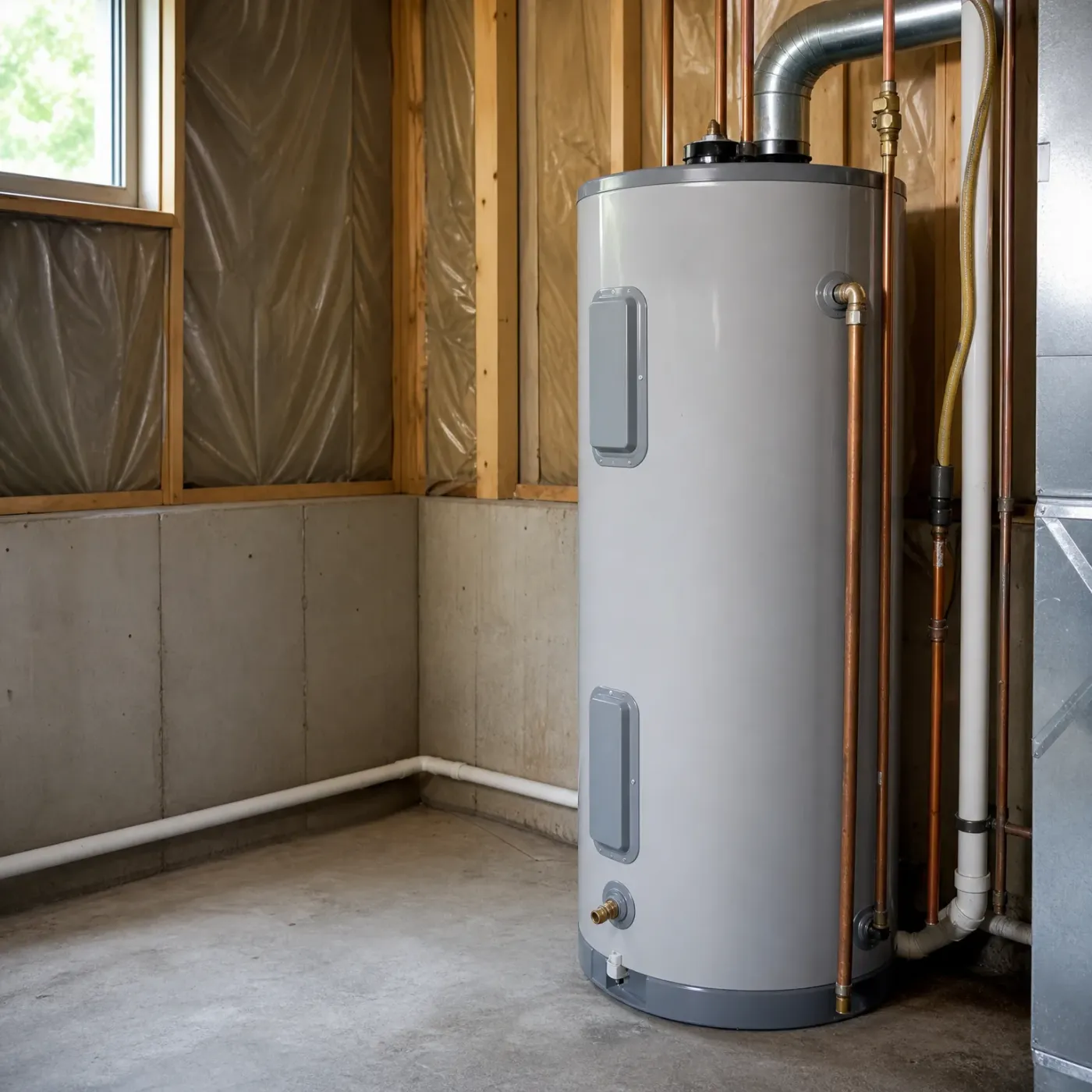
Hand off the water heater problem
Your request goes to one pro, not a list of companies.
After you send the request, you're done searching.
Sending the form costs nothing.
53.5% of homes statewide heat with electricity
Most houses around you run an electric water heater, not gas. Electric elements don't heat the tank as hot as a gas burner does, and that cooler water is friendlier to the sulfur bacteria behind the smell. It's a big reason this shows up so often in Oregon homes.
ACS 2020-2024 5-year B25040
What the Smell Comes Down To
- The rotten egg smell comes from hydrogen sulfide gas forming between the anode rod and bacteria in the tank, not from the water itself.
- Electric water heaters, common across Oregon homes, run cooler than gas ones and give those sulfur bacteria more room to thrive.
- A technician who services water heaters here all year knows which rod material and which tank conditions usually cause this smell.
- The fix is mechanical, either flushing the tank, replacing the anode rod, or adjusting the thermostat, and it holds once it's done right.
- You'll be matched with one licensed local contractor rather than a batch of callbacks from companies outside the area.
- That contractor already knows what tends to fail in Oregon's electric water heaters, so diagnosing yours won't start from scratch.
The smell is hydrogen sulfide gas, made when bacteria in the tank react with the anode rod. Electric water heaters run cooler than gas ones, and that cooler water is exactly where those bacteria do well. Since most homes in Oregon are on electric, this shows up here more than it would somewhere running gas heat.
None of that means the tank is unsafe to use, and none of it means the water heater is failing. It means something inside the tank needs attention: the rod, the water, or the temperature it's set to run at. A flush, a new anode rod, or a thermostat adjustment usually clears it, and once it's done right, it stays gone.
What makes the difference is who does that work. A contractor who services water heaters in Oregon all year has already seen this exact pattern, electric tank, rotten egg smell, cooler running temperature, more times than they can count. They know which rod material tends to cause it and which tank conditions make it worse, so they're not guessing when they open yours up.
When you send the request, you're matched with one licensed local contractor, not a list of companies competing for the job. One call, one visit, someone who already knows what usually fails in a tank like yours. That's the part that makes this easy to put behind you.

Water Heater Repair
Send one request and you're done looking

- Describe your water heater job, and a local pro who handles it gets in touch.
- Say what's going on with your water heater, and a pro who works on them reaches out.

- Send the request and finding a pro stops being your problem.
- After this form, you can stop searching for a water heater pro.

- Answer a few questions instead of calling shop after shop.
- Describe your water heater job once, to one pro.

- Only one pro gets your request, so you hear from one company.
- Your request stays with one local pro.