Tell a local repair pro what your water heater is doing.
You turn on the shower and it's hot. Ten minutes later it's not. Most homes in Oregon heat water with electricity, and an electric water heater that used to carry you through a shower and a load of dishes shouldn't suddenly run short.
Something changed. A lower heating element can fail while the top one still works, which leaves you only the first few minutes of a tank's worth of hot water instead of all of it. Sediment can settle at the bottom of the tank and eat into the space where hot water actually sits. A thermostat that's drifted out of calibration can tell the tank it's done heating before it really is.
None of that is something you can see by looking at the outside of the tank. You can run through guesses, or you can have someone who works on these for a living look at the actual unit and tell you which of those it is.
That's what this page connects you to. Fill out the form and you'll be matched with a contractor who handles water heater repair in your area, and they'll reach out to you directly. You won't be the one calling around, explaining the problem twice, waiting on hold to find out if someone even works on your brand of tank. That part is off your plate once you send it.
What you get back is someone who already knows, before they show up, that you're dealing with a water heater that's running out early, not one that's dead. That's a different job than a full replacement, and it's worth having someone look at it who can tell the difference instead of guessing from a showroom floor.
You don't need to diagnose it yourself first. That's the point of asking.
Running out of hot water fast usually means the tank can't hold its heat or can't recover between uses. In an electric water heater, that's often one of the two heating elements. Most tanks have an upper and a lower element, and when the lower one fails, the tank still heats but only the top portion gets hot, so you get a few minutes of warm water before it turns cold. A bad thermostat can cause the same thing by shutting the elements off too soon. Sediment settled at the bottom of the tank is another common cause. It builds up over years, and it takes up space that used to hold hot water while also making the burner or element work harder to heat what's left. None of this is something to live with. A water heater that's losing capacity usually keeps getting worse, not better, until a repair brings it back to how it used to run.
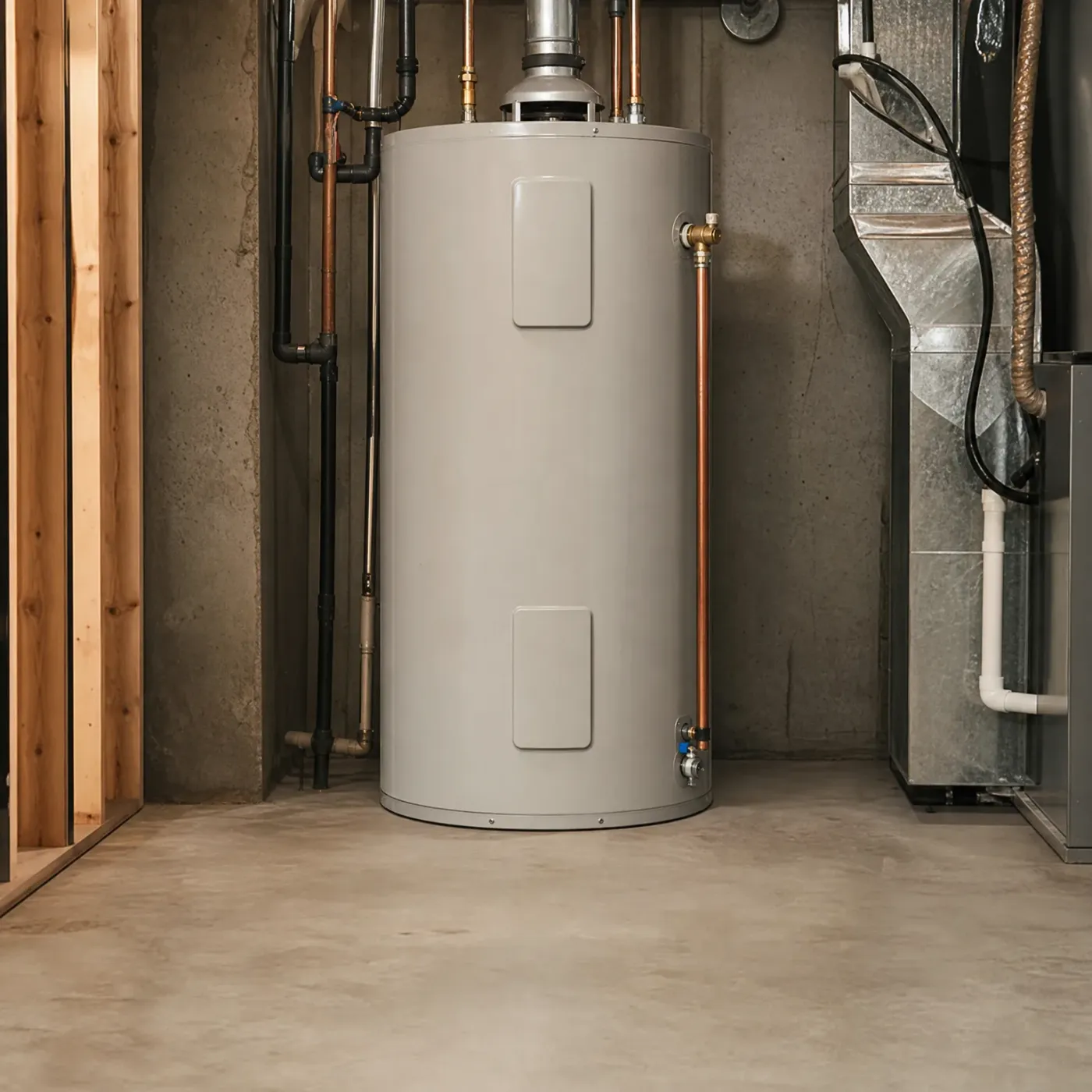
Both elements working, the tank insulated and the fittings dry, a water heater like this delivers a full tank of hot water every time.
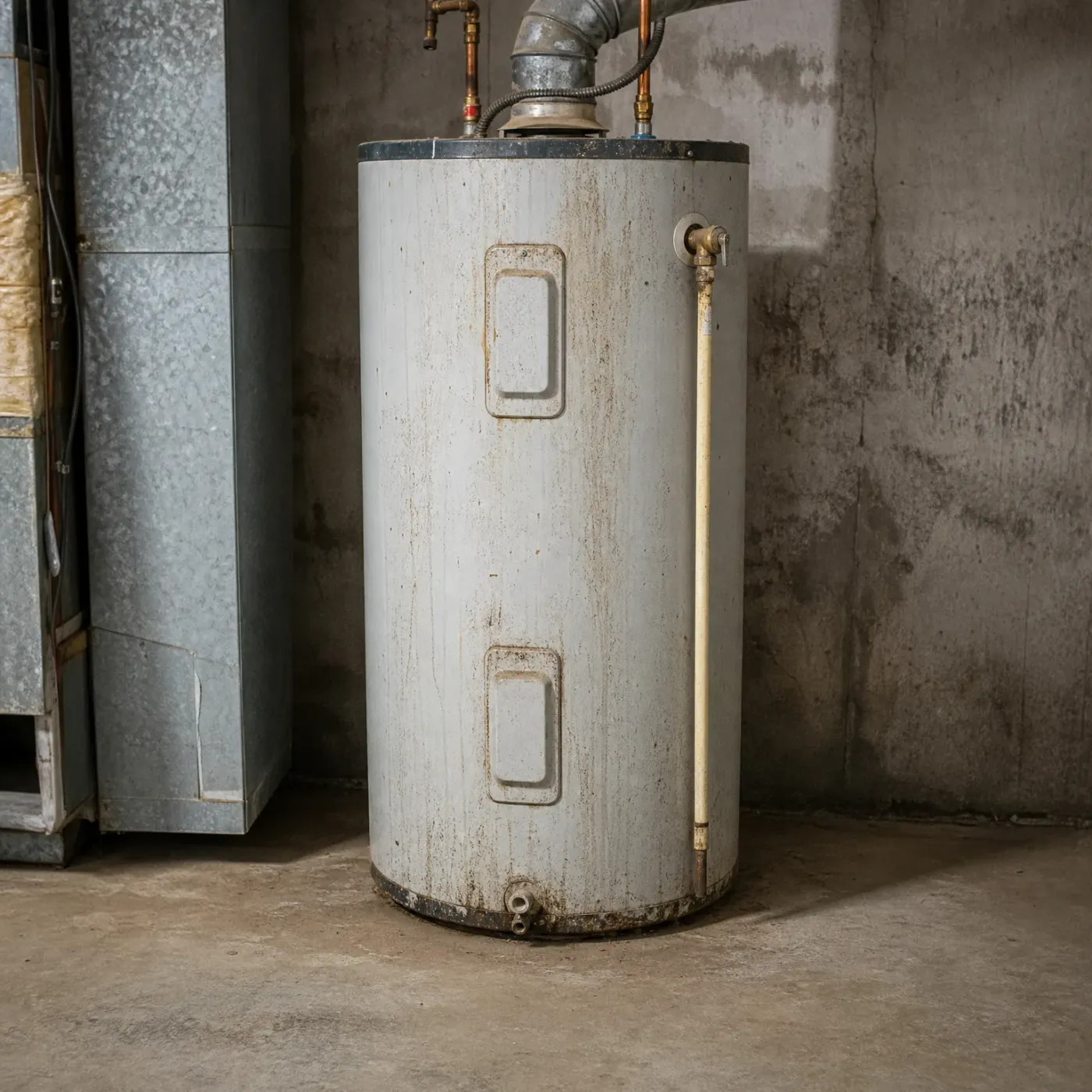
Rust across the tank and fittings like this means the steel is failing inside too, and heat leaks out faster than the elements can replace it.
How the two elements work
Electric water heaters use two elements, and a thermostat on the tank tells each one when to switch on.
The upper element heats the top of the tank first, then shuts off so the lower element can carry the rest of the tank.
If the lower element burns out, cold water sits at the bottom and reaches the shower as soon as the top few gallons run through.
A thermostat stuck or set too low can shut an element off before the tank reaches full temperature.
Sediment collecting around the lower element makes it work harder and can cause it to fail sooner.
A tripped high-limit switch will cut power to both elements even if only one has actually failed.
An electric water heater splits the job between two elements instead of one. The upper element works first, heating the water near the top of the tank where the shower draws from. Once that section reaches temperature, the thermostat switches it off and hands the job to the lower element, which heats the rest of the tank. That handoff is why the order of failure matters. If the upper element fails, you notice right away because the water never gets hot at all. If the lower element fails, the top few gallons still heat fine, so the first few minutes feel normal. Then the hot water runs out fast, because everything below the top of the tank stayed cold the whole time. Sediment makes this worse. It settles at the bottom first, and a lower element buried in sediment has to work harder to heat the water around it, which shortens its life. A thermostat that's stuck or set too low can also shut an element off early, leaving the tank short of a full hot fill even with both elements intact. And if the high-limit switch trips, from overheating or a loose wire, it cuts power to both elements at once, so the whole tank goes cold even though only one part actually caused the problem.
Send the request today and stop worrying about who to call.
You only hire the pro if you want to.
What a failed element costs you
A lower element that's stopped working doesn't just mean weaker heat. It means the bottom half of the tank sits cold while the top half heats normally. You get a few minutes of real hot water, drawn from the top, then the tank hands you whatever's left underneath. That's why the drop-off feels sudden instead of gradual. The thermostat on a working system should cycle the lower element on as soon as the upper one finishes its job. When it doesn't, there's no second stage of heating to fall back on. Sediment buildup on the bottom of the tank can cause the same pattern, insulating the lower element from the water it's supposed to heat, so the element works but the heat doesn't transfer.
Checking the tank from outside
You don't have to open anything to get a sense of what's going on. Feel the tank at the top and at the bottom during a heating cycle. If the top warms up but the bottom stays cool to the touch, that points straight at the lower element or its thermostat. Check the panel on the side of the tank too. Scorch marks or a burnt smell around either element access panel usually means that element has already failed, not just weakened. None of this tells you exactly what's wrong inside, but it narrows down which half of the tank stopped doing its job, and that's the kind of detail worth having ready before anyone looks at it.
What you notice day to day
The shower runs hot for a few minutes, then turns lukewarm no matter how you adjust it. Dishes left to soak don't get the second round of hot water they used to. Laundry on a hot cycle right after a shower comes up short. If you've started timing showers around the water heater, or telling people to wait before they run the dishwasher, that's the household working around the tank instead of the tank doing its job.
What it means for your bill
A lower element that's failed doesn't stop drawing power, it just stops heating the water the way it should, so the upper element runs longer trying to cover for it. You pay for electricity that isn't turning into hot water downstairs in the tank. Since most homes in Oregon heat water with electricity, that shows up directly on your power bill instead of a gas line, and it keeps climbing the longer the element goes unrepaired.
53.5% of homes statewide heat with electricity
Most houses in Oregon run on electric water heaters, which is why that bad element matters so much here. There's no gas burner to fall back on if a thermostat or element misreads the water, so the tank depends entirely on both elements doing their job.
ACS 2020-2024 5-year B25040
A tank with one working element won't catch up
Running out of hot water fast comes down to recovery. Either the tank can't hold the heat it makes, or one of the two elements has stopped doing its share of the work. On an electric tank, there's no second system to lean on, so a bad lower element shows up right away as a short shower and cold dishwater.
A contractor who looks at the tank can tell you which it is, the element or the insulation, and what that means for your specific setup. Once you send the details, you're not the one who has to track that down. A contractor who handles this work in Oregon gets in touch, and the tank stops being something you have to think about every morning.
Get the right pro for your water heater
Send the request and finding a pro stops being your problem.