Fill out one form instead of calling around for a water heater tune-up.
120 degrees is the setting most plumbers use for a water heater in Oregon, and it's a good default if you haven't touched the dial since the house was built. It gets you hot enough for dishes and showers without wasting power heating water nobody uses that hot.
If your water heater runs on electricity, the setting matters a little more here than in places with cheap power. Oregon rates aren't unusually high or low, but every degree above 120 adds to the bill without much benefit. Dial it down to 115 and most households won't notice a difference at the tap.
Your tank, your plumbing, and how many people draw hot water at once all affect what setting actually works for your house. A tank that's too small for the household gets run at 125 or higher just to keep up. A tank that's oversized can go lower. There's no way to know which one you have without looking at it.
That's where someone who services water heaters for a living is worth more than a guess. A local plumber who works on tanks all over Oregon every week knows which brands drift out of calibration, which thermostats read five degrees off what they're set to, and what setting actually holds steady in a house like yours.
Finding that person yourself means searching through listings, calling a few, explaining the make and age of your tank each time, then sitting on quotes trying to figure out which one is worth it. This page skips that part. Tell it what you've got and you're connected with one licensed Oregon plumber who already knows this equipment, not a list of five companies competing for your callback.
From there, the setting on your tank is a five-minute conversation, and the rest of this page covers what to check before you touch the dial yourself.
120 degrees works for most households, but the right number depends on what you actually do with your hot water. If the dishwasher has its own heating element, you don't need the tank any hotter than 120. If someone in the house has small children or just prefers a cooler tap, 115 still covers a shower and a sink full of dishes. Go above 120 and you raise the risk of scald burns at the faucet, and on an electric water heater, which is what most homes here run, you're also paying to keep water hotter than anyone uses. The dial is usually behind a small panel near the bottom of the tank, marked in increments rather than exact degrees, so a thermometer run under the tap for a minute is the only way to know what you're actually getting. Check it once, adjust if needed, and it holds until someone bumps it again.
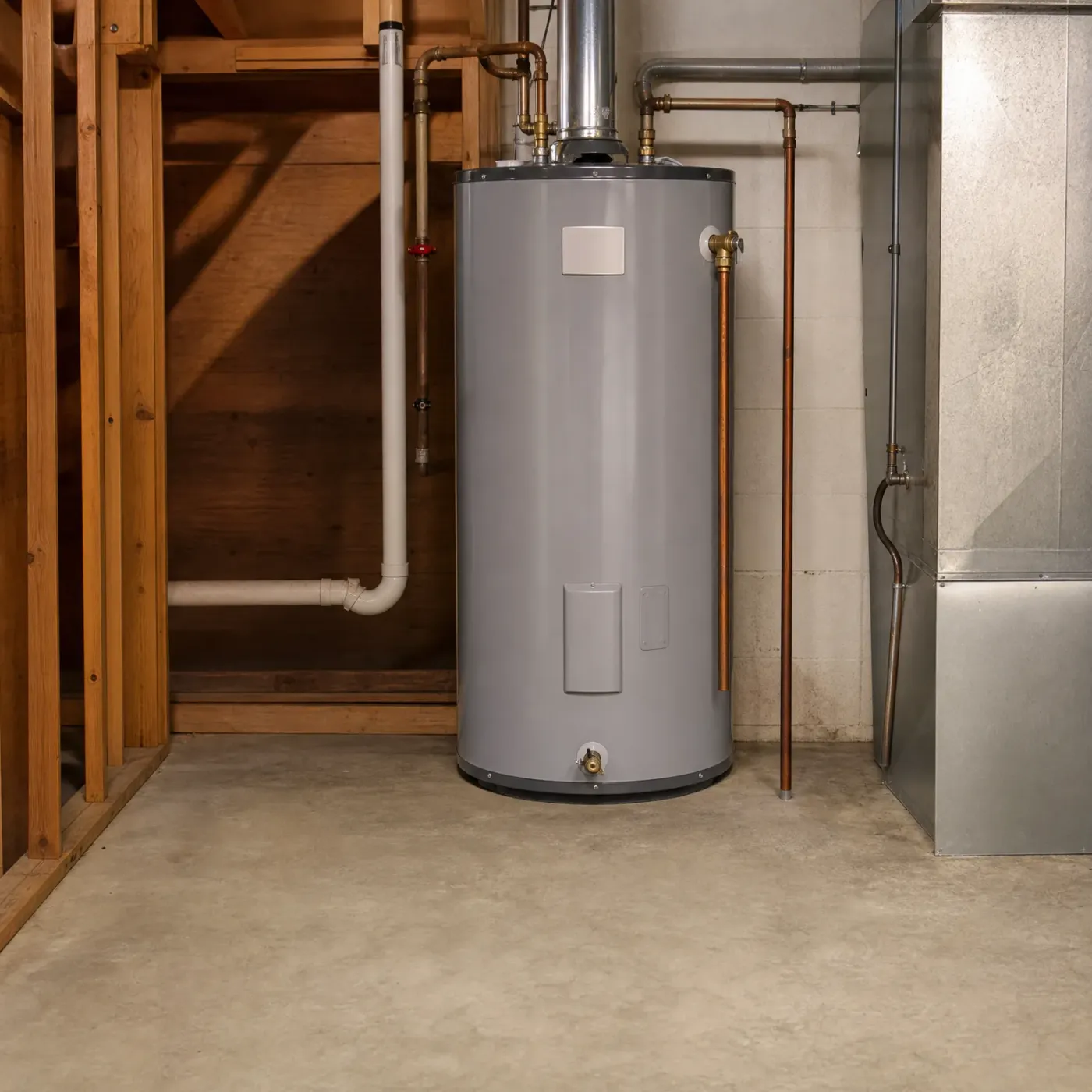
Before you get your water heater maintenanceAfter you get your water heater maintenance
A licensed local pro takes the request for your water heater tune-up.
There's no charge for the request.
Why the number matters at all
Water heated past 120 degrees doesn't get you more hot water, it gets you water that has to be mixed down with cold at the tap before you can put your hands in it. Every degree above that is a degree you paid to heat and then paid again, in time at the faucet, to cool back off. Go the other way and set it too low, under 110 or so, and the tank becomes a place where bacteria can grow undisturbed. The 120 number isn't a compromise. It's the point where the tank is hot enough to stay clean and cool enough that you're not throwing power at water you'll just dilute.
What the dial doesn't tell you
The thermostat dial on most tanks is a guess, not a readout. Two tanks both set to 120 can deliver water at different temperatures depending on how the thermostat has drifted, how much sediment has settled on the bottom, and how far the tank sits from the faucet you're testing at. A contractor who services tanks through all four seasons here checks the actual output with a thermometer at the tap, not just the number on the dial, because that's the only way to know what temperature you're really getting. Sediment buildup especially will throw the dial off over time, running the burner or element longer than it should to hit the same setting.
Leave the dial where it sits for years and you stop thinking about it, until the day the shower runs lukewarm or the tank starts ticking and popping while it heats.
A setting that's wrong for your house doesn't announce itself. It shows up as a higher power bill every month or a tank that fails sooner than it should have.
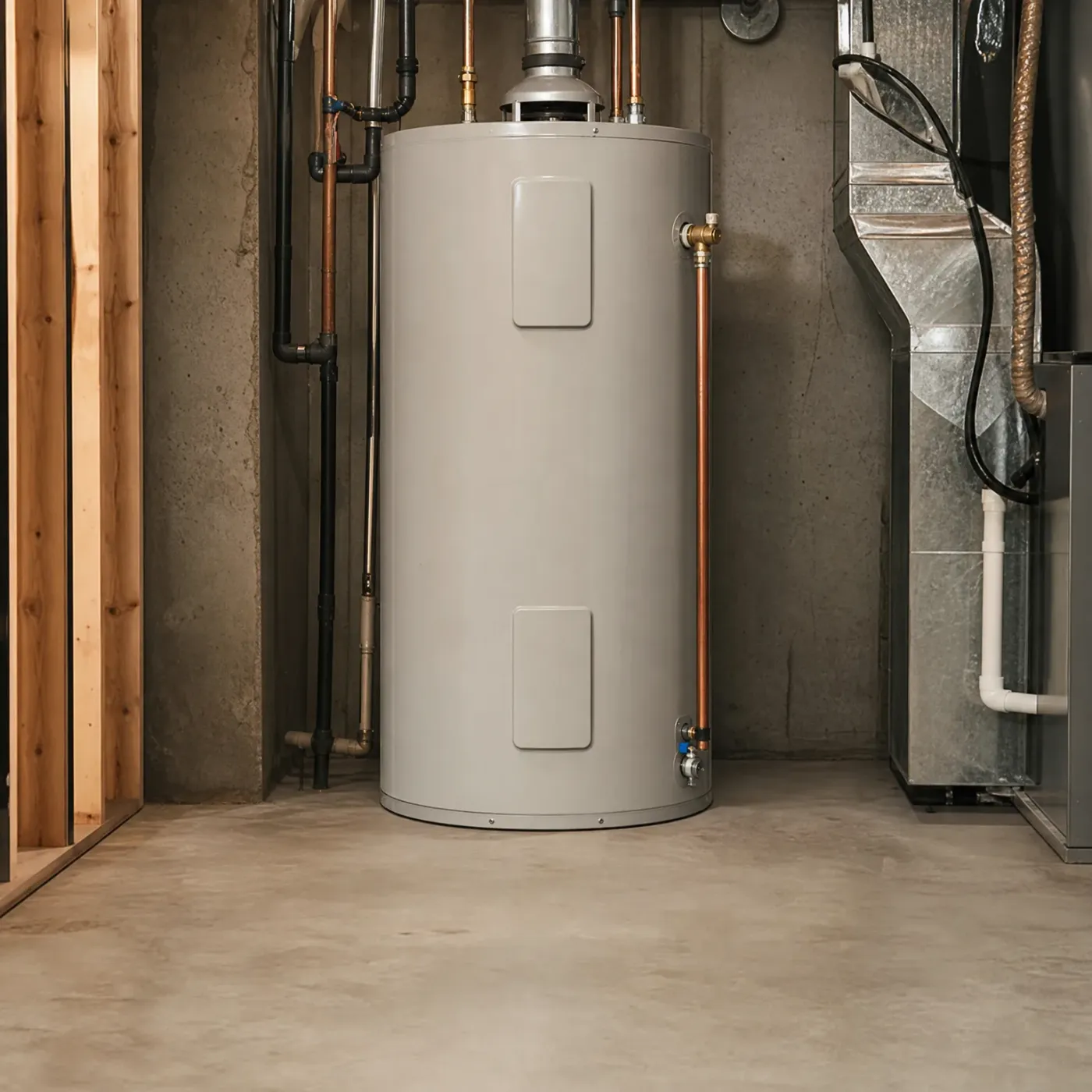
Dial set right
This is a tank doing its job. The setting matches what the house actually uses, the element isn't fighting to hold water hotter than anyone needs, and the pipes and connections stay dry because nothing's under more pressure than it should be. A tank left alone like this can run for years without a surprise.
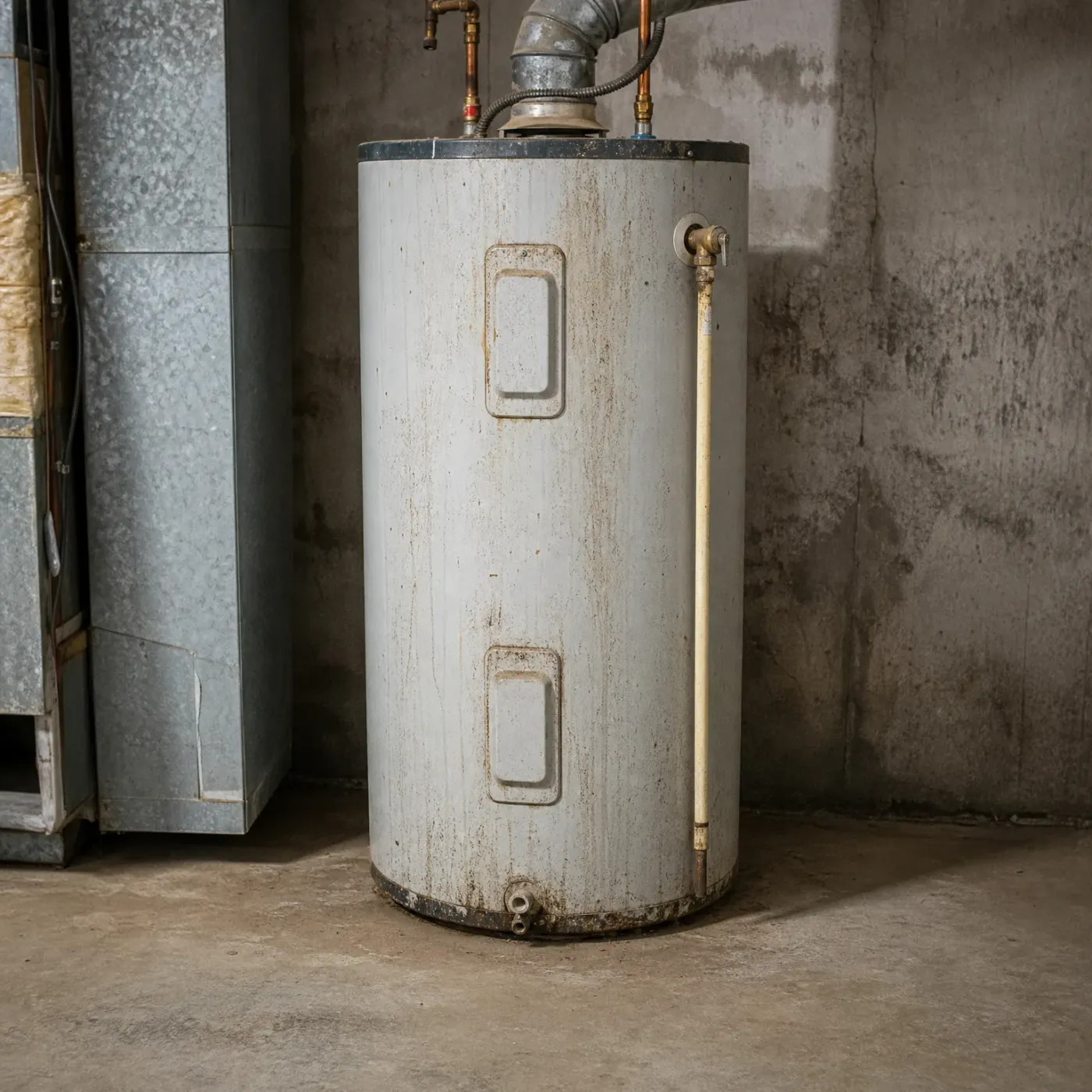
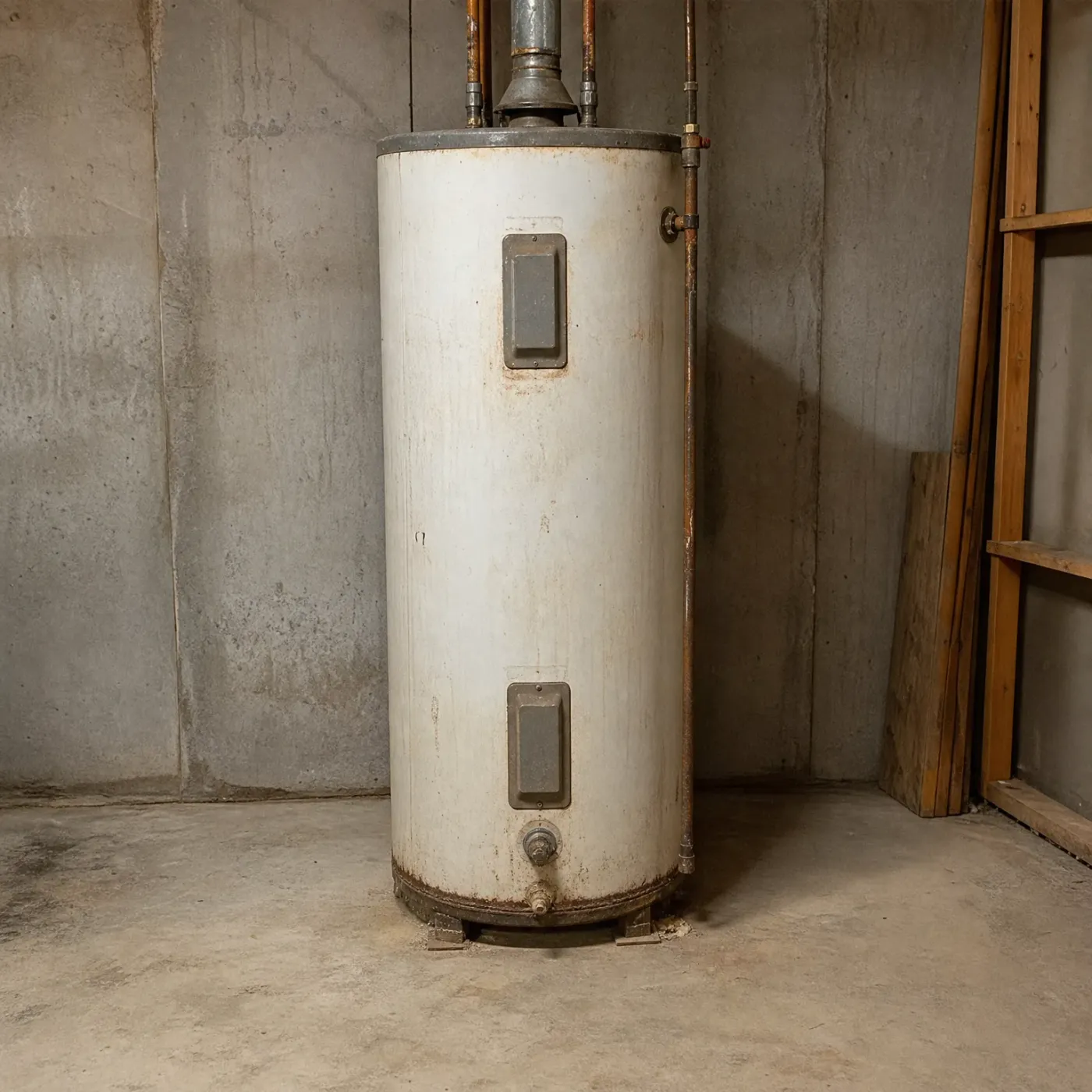
Dial left too high
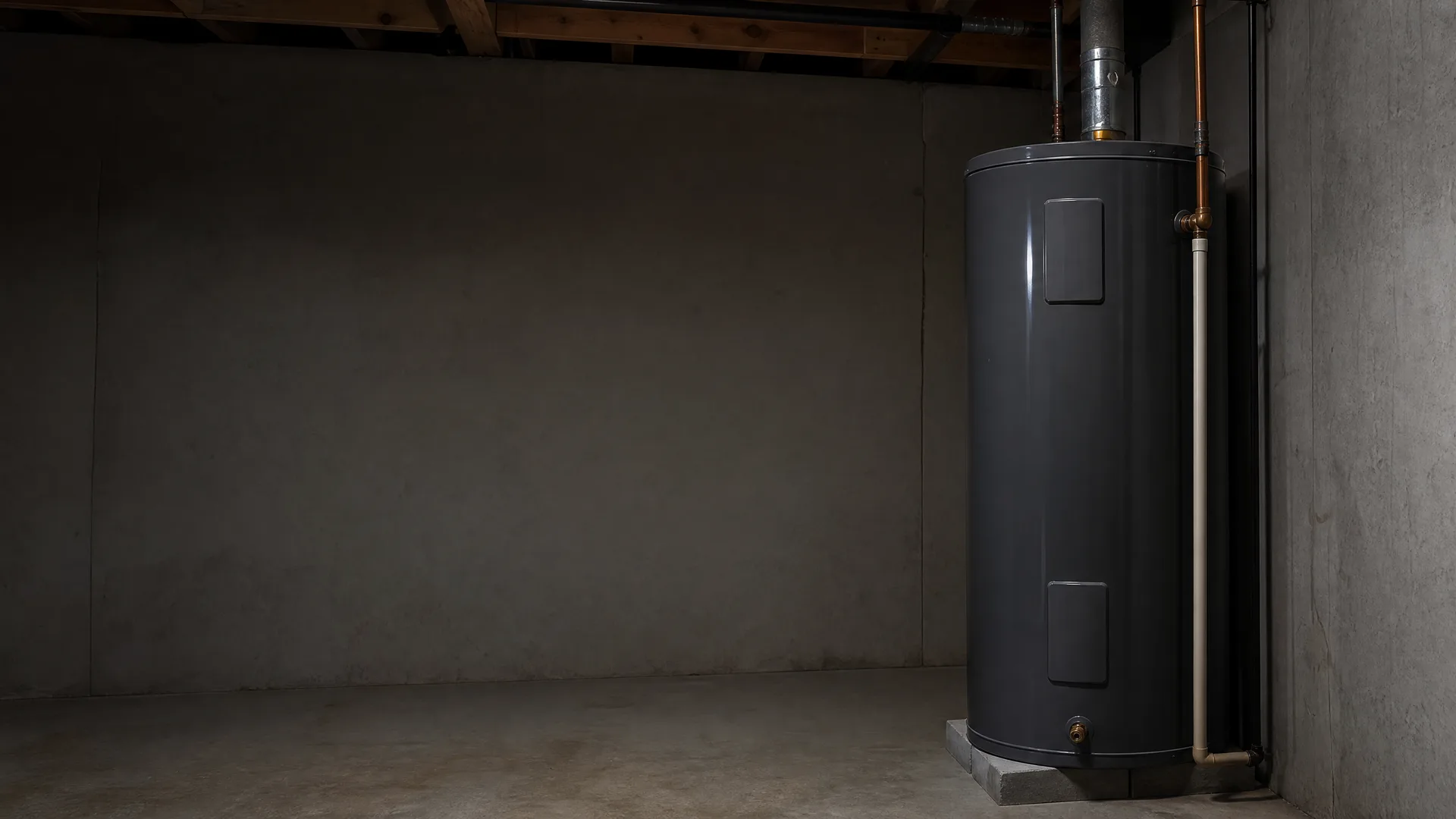
Rust like this on the tank shell often comes after years of a setting pushed too hot. The metal and the fittings take the heat every single day, and the two thermostat panels on the front are worth a look if the water coming out never seems to match where the dial is set.
53.5% of homes statewide heat with electricity
Odds are your water heater runs on electricity like most homes in Oregon do. That means the dial setting has a direct line to your power bill, with no gas company passing on a flatter rate to soften a setting left too high.
ACS 2020-2024 5-year B25040
120 degrees, checked once a year
120 degrees is the right setting for most houses in Oregon, and now you know why: hot enough to run the dishwasher and shower without the tank burning power on water that just sits there losing heat. Where you land inside that might shift a few degrees for a bigger household or a kid in the house, but the number isn't a guess anymore.
What's harder to check yourself is whether the tank is actually holding that setting, or whether the element, the anode rod, or a layer of sediment is quietly working against it. That's where a local contractor who services water heaters all over Oregon earns the call, not the search for one. One licensed pro who already knows what tends to go wrong in homes around here, instead of a string of estimates you have to chase down and compare on your own.
Describe it once
Your request goes to one pro, not a list of companies.