Tell us about the job
Takes about a minute. No obligation.
Electric water heaters in this county are doing the whole job themselves, with no gas burner or flue involved. Electricity heats more occupied homes in Gilliam County, Oregon than any other fuel, at 53.9% (2020-2024 ACS 5-year). That means a contractor diagnosing a struggling unit looks at the elements and thermostats first, because sediment buildup and element degradation are the failure modes this fuel type produces. A unit that is slow to recover or running the top element constantly has usually lost capacity in the lower element, and replacing it before the thermostat fails behind it keeps the repair to one visit.
Pipe fittings, supply lines, and shutoff valves in houses of this vintage have been through more replacement cycles than most homeowners track, and each one leaves the next system inheriting whatever the last one left behind. Half the homes in Gilliam County, Oregon were built in 1961 or earlier (2020-2024 ACS 5-year). That depth of accumulated use means a contractor opening a water heater for a repair finds the unit itself is rarely the whole story. Sediment in the tank, corroded connections at the inlet, and worn shutoff valves that have not moved in years are all part of what gets assessed and priced. A quote that stops at the appliance misses what the plumbing around it actually contains.
The Parts of a Water Heater a Contractor Checks During a Repair
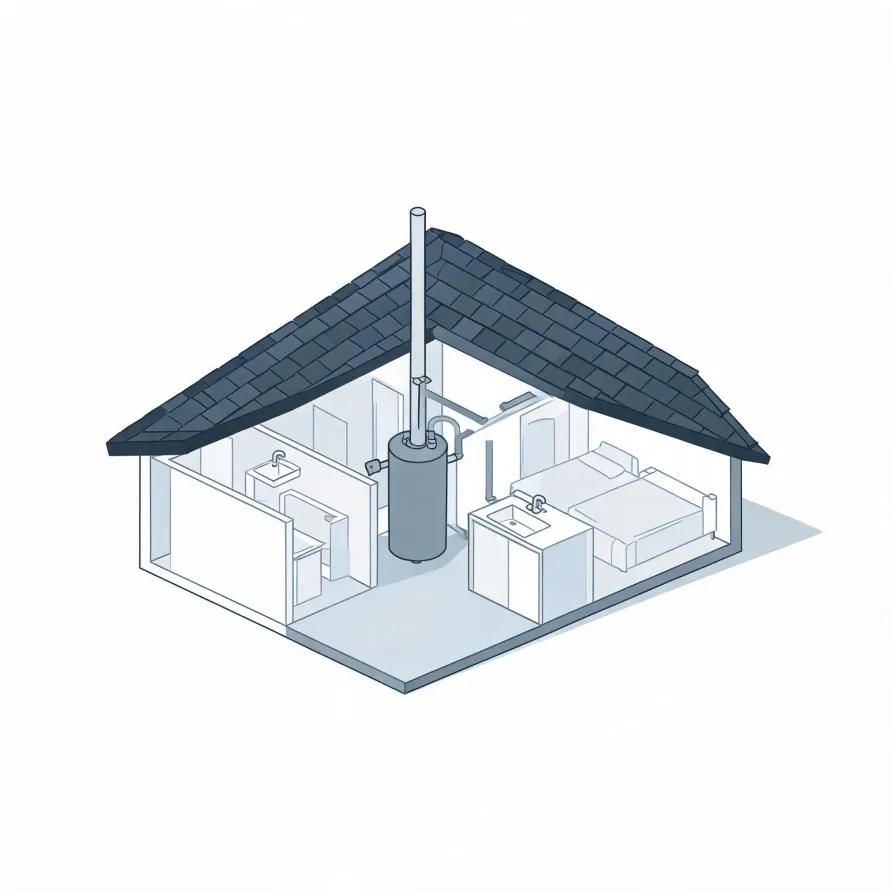
The tank is the center of the system, sitting in a utility room, basement, or closet, and its job is to hold and heat a supply of water ready for use. The burner assembly or heating element sits inside or beneath the tank and is where heat is actually produced. When hot water runs out fast, arrives lukewarm, or the unit makes noise, one of these two is where a contractor looks first.
The thermostat mounts to the tank and tells the heating source when to fire and when to stop. The pressure relief valve sits on the tank's side or top and opens if internal pressure climbs too high. The anode rod hangs inside the tank to slow corrosion, and the dip tube runs down through the tank to direct cold incoming water to the bottom.
The drawing shows a general layout of these components, and a licensed contractor determines which parts apply and what condition they are in for your specific unit.
Get matched in Gilliam CountyGilliam County, Oregon, by the numbers
84 severe weather events were recorded in Gilliam County, Oregon between 2015 and 2024.
NOAA National Centers for Environmental Information, Storm Events Database, bulk CSV export, events 2015-01-01 through 2024-12-31.Half the homes in Gilliam County, Oregon were built in 1961 or earlier (2020-2024 ACS 5-year).
U.S. Census Bureau, 2020-2024 American Community Survey 5-Year EstimatesGilliam County, Oregon holds 1,138 housing units (2020-2024 ACS 5-year).
U.S. Census Bureau, 2020-2024 American Community Survey 5-Year EstimatesOwners occupy 74.1% of the occupied homes in Gilliam County, Oregon (2020-2024 ACS 5-year).
U.S. Census Bureau, 2020-2024 American Community Survey 5-Year EstimatesCodes & Standards Covering Water Heater Repair in Gilliam County, Oregon2 sourced rules and standards
Licensing and Legal Requirements in Gilliam County, Oregon
Oregon’s contractor licence does not reach casual, minor or inconsequential work on one structure where the person’s contracts total less than $1,000 — and the exemption is unavailable to anyone who advertises or signs themselves as a contractor, at any price.
Oregon requires a current Construction Contractors Board licence, with the right endorsement, to undertake, offer to undertake or bid construction work.
Severe Weather Events in Gilliam County
Extreme weather puts real strain on water heaters, pushing them through pressure swings, temperature extremes, and power disruptions that wear components faster than normal use does. How much of that stress a unit absorbs depends on local conditions, which is why the weather record for this area is part of the repair picture.
84 severe weather events, 2015–2024. Source: NOAA National Centers for Environmental Information, Storm Events Database.