

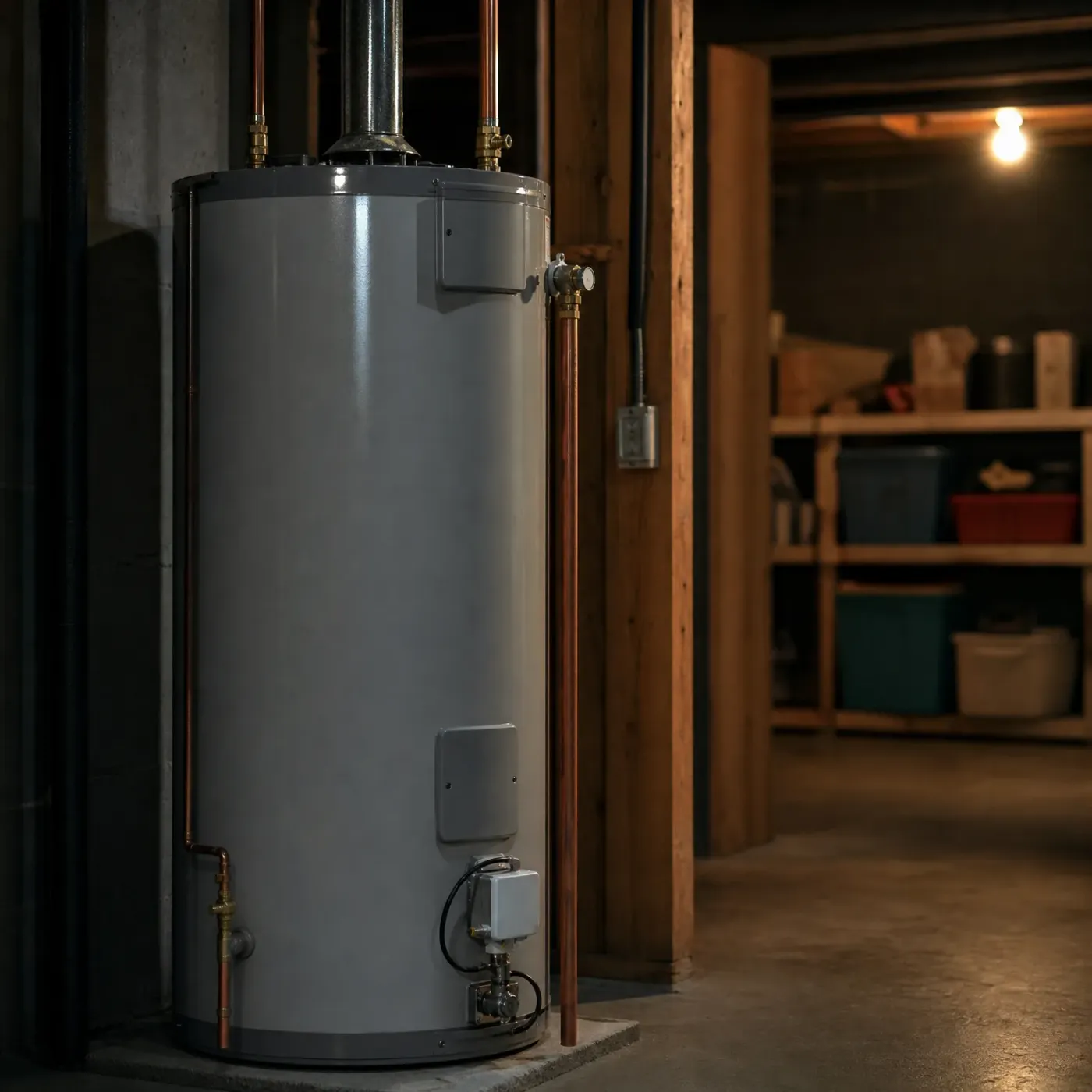
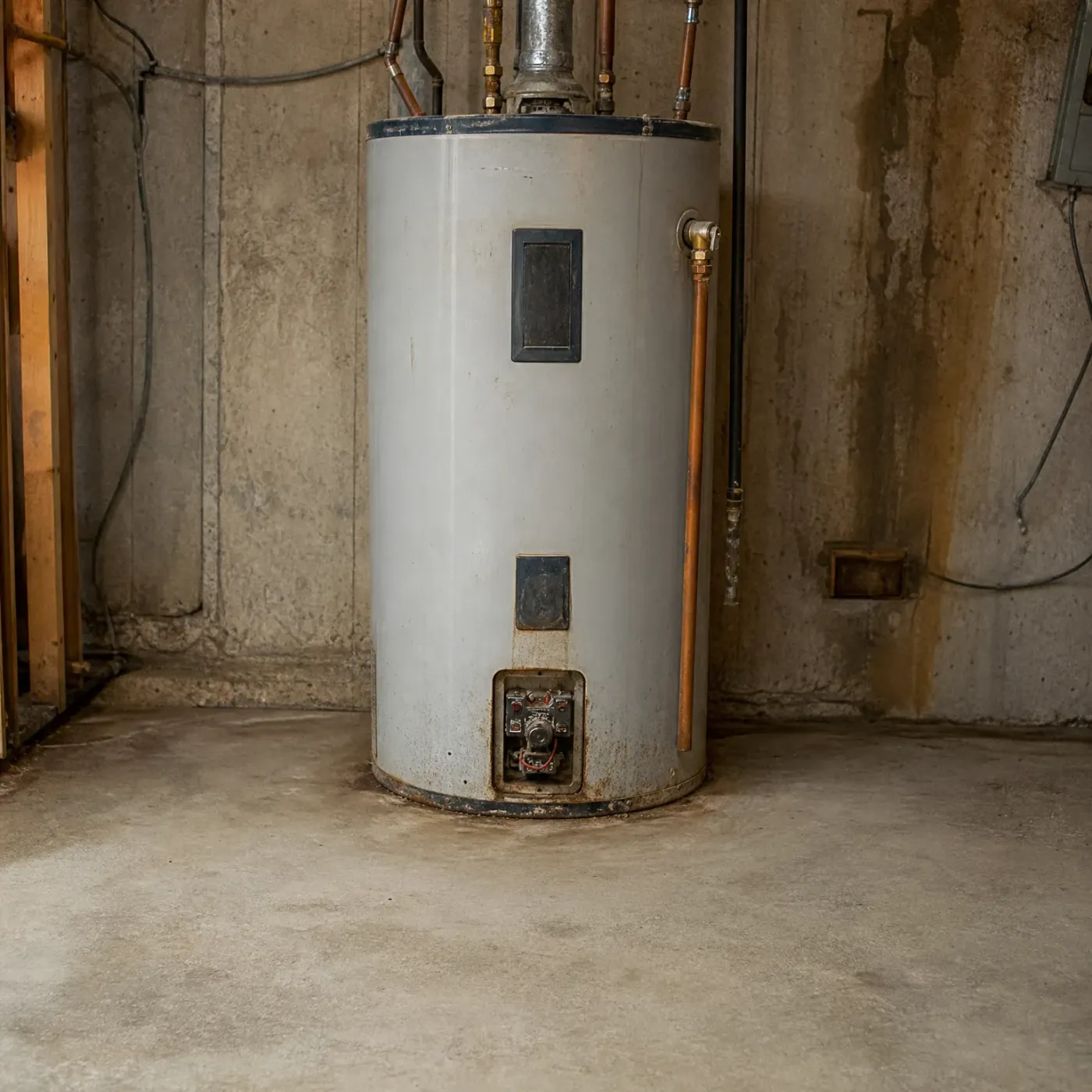
A gas water heater working as it should
This is what a gas installation looks like done right: copper and black gas pipe run clean to the ceiling, tank set level, nothing improvised. No rust, no corrosion, no shortcuts on the venting.
Finding a pro stops being your job
Most homes in Oregon already run on electricity, so switching to gas means running a new line, not just swapping tanks, and that changes the cost and the work involved. This page walks through what decides it: what you have now, what's available at your house, and what each type means for the install itself. Send the form and stop calling around for someone who can actually do the work.
Let a pro reach outMost Oregon homes already have electric service to the water heater, and most stick with electric when it's time to replace it, because the wiring is already there and electric water heaters cost less to install. Gas can heat water faster and recover quicker after a long shower, but it only makes sense if a gas line already runs to your house or close enough to extend. If you're on electric now with no gas line nearby, adding one means trenching, piping and a permit, on top of the new water heater itself. If gas is already at the house for a furnace or stove, running a line to the water heater is a smaller job. Power prices here are ordinary, so the usual case for switching to save on bills is weaker than in places where electricity costs more. For most homes here, the answer comes down to what's already at the house, not which fuel is better.
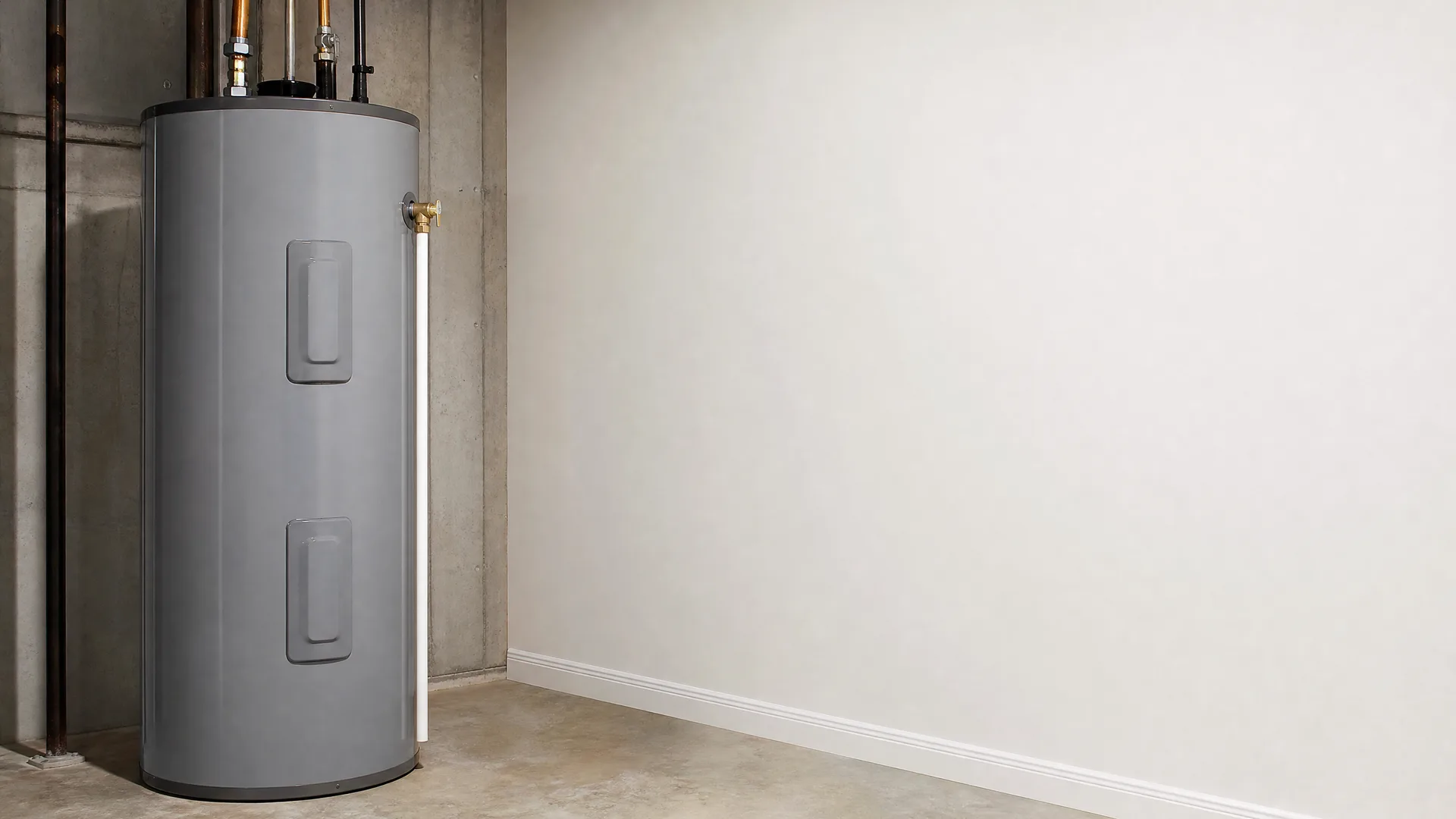
An electric water heater needs a 240-volt circuit and two heating elements inside the tank, upper and lower. There's no flue, no venting, no combustion to account for. If a home already has the circuit, putting in a new electric tank is mostly disconnecting the old one and setting the new one in its place. That's why electric stays the simpler install for most houses here, and why it tends to be the faster one too.
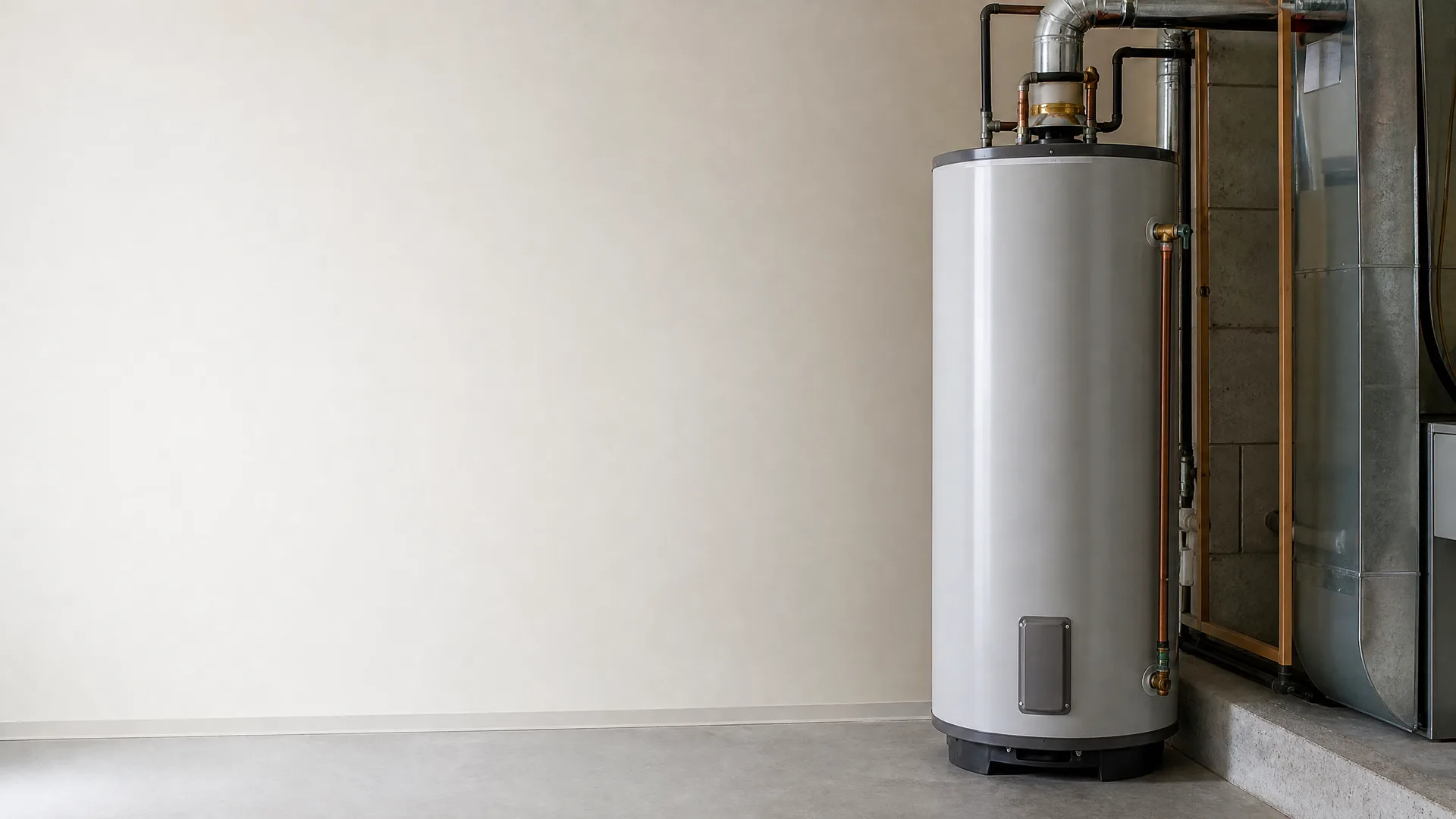
A gas water heater needs its own gas line sized for the burner, plus a vent to carry exhaust outside. If the house doesn't already have a gas line run to that spot, that line has to be installed, which means routing it from the meter or an existing branch through the house. The venting has to be sized and placed correctly too. Neither of those exist yet in a home that's never had gas water heating.
You're asking this because the earlier switch from electric to gas sounds like more than a tank swap. It is. Before anyone can give you a timeline, a contractor has to see what's actually there now: the panel, the space where the tank sits, whether a gas line runs anywhere near it. That visit decides the schedule, not a general rule.
If gas service already comes into the house but just doesn't reach the water heater, a contractor runs a new line to that spot, adds venting for the exhaust, and sets the tank. If there's no gas line to the house at all, the gas utility has to bring one in first, and that step isn't in a contractor's hands. Either way, the electric circuit that used to feed the old tank gets capped off, since it won't be used anymore. None of this happens on the visit where someone looks at the space and gives you a plan. That first visit is where the real timeline for your house gets set.
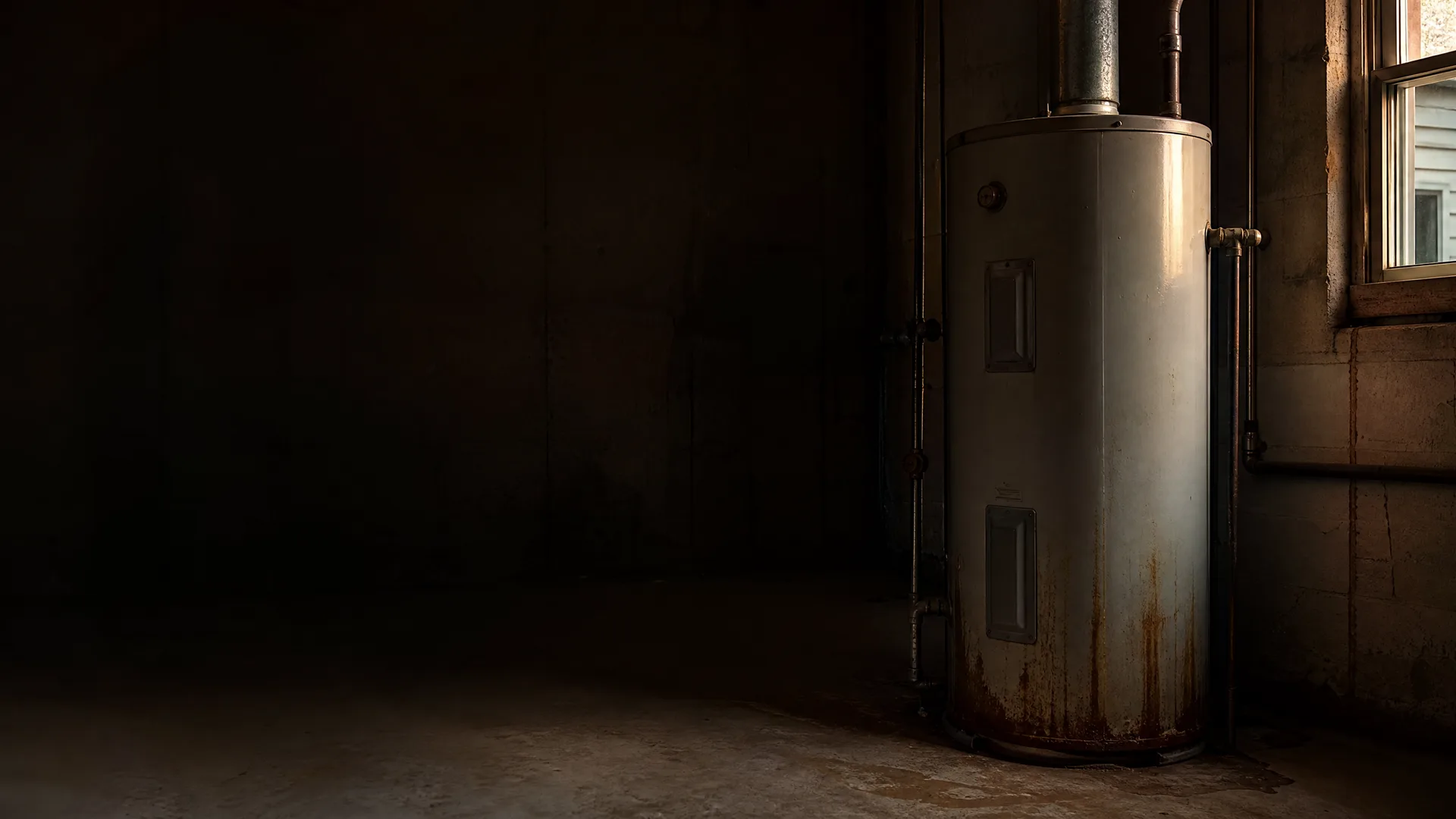
You go down to the utility room to grab something off the shelf, and the light catches the base of the tank. Rust streaks run down the side, orange against the metal, pooling where the tank meets the floor. It's early evening, nothing dramatic happening, you weren't even looking for a problem. The house is quiet upstairs. You crouch down and touch the streak and it's damp. This tank has been down here since before you moved in. You don't know what year it was installed, only that it's old enough that this isn't a fluke, it's the metal giving out. You stand back up and go find your phone.
Skip collecting and comparing quotes for the new water heater.
No charge to send it. You decide if you hire them.
An electric water heater does its work inside the tank. Two elements, one near the top and one near the bottom, heat the water around them directly, and a thermostat on each one calls for heat as needed. There's no flame, no air to draw in, no exhaust to get rid of. A gas water heater works from underneath. The burner sits in a chamber at the base of the tank, lights off a thermocouple or igniter, and heats the metal bottom, which heats the water above it. Because the whole bottom surface is doing the work at once, a gas tank brings a full tank back up to temperature faster than an electric one does. That's the tradeoff on the gas side though: fire needs air to burn and somewhere for the exhaust to go, so the tank has to connect to a flue pipe or a sidewall vent, and it needs clear space around it to draw air safely. None of that applies to an electric tank, which is part of why electric installs tend to be simpler where the wiring already exists. The other difference shows up at repair time. If an electric element fails, a contractor can replace that one element without disturbing the water lines running to the tank. A gas burner assembly, thermocouple, or igniter is a different kind of part, tied into the gas supply rather than the wiring, and whether a home has that supply at all is the first thing a plumber has to check before any of this is on the table.


The old tank gets drained and disconnected from water and power.
A new electric circuit gets run if the tank needs more power than the old one drew.
The new tank goes in and connects to the water lines and the circuit.
The heating elements get tested and the tank gets checked for leaks.
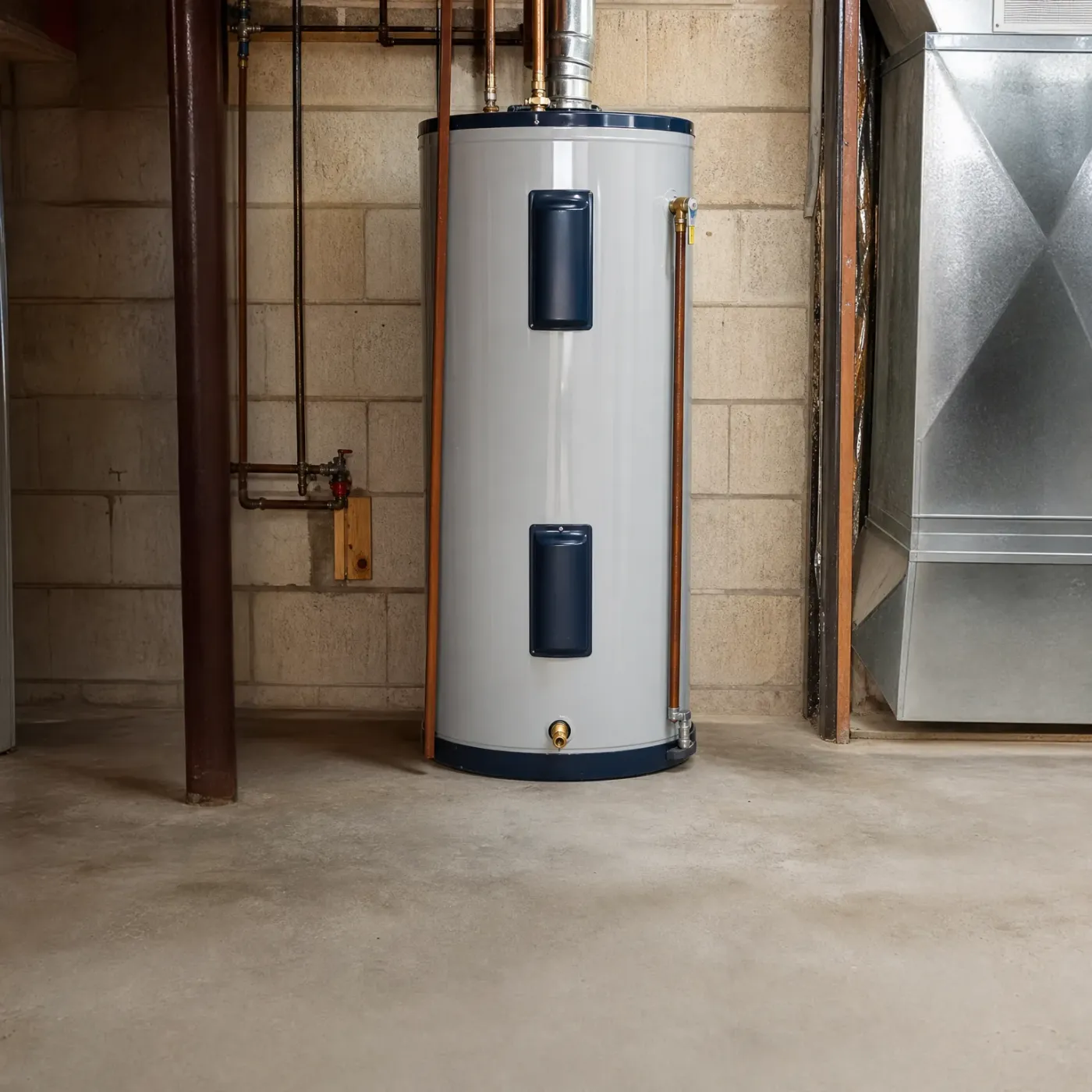
More than half the homes in Oregon run on electricity, and that's most likely what's feeding your water heater right now. Staying electric when you replace it means the circuit is already in place. No new line to run, no flue to add.
ACS 2020-2024 5-year B25040
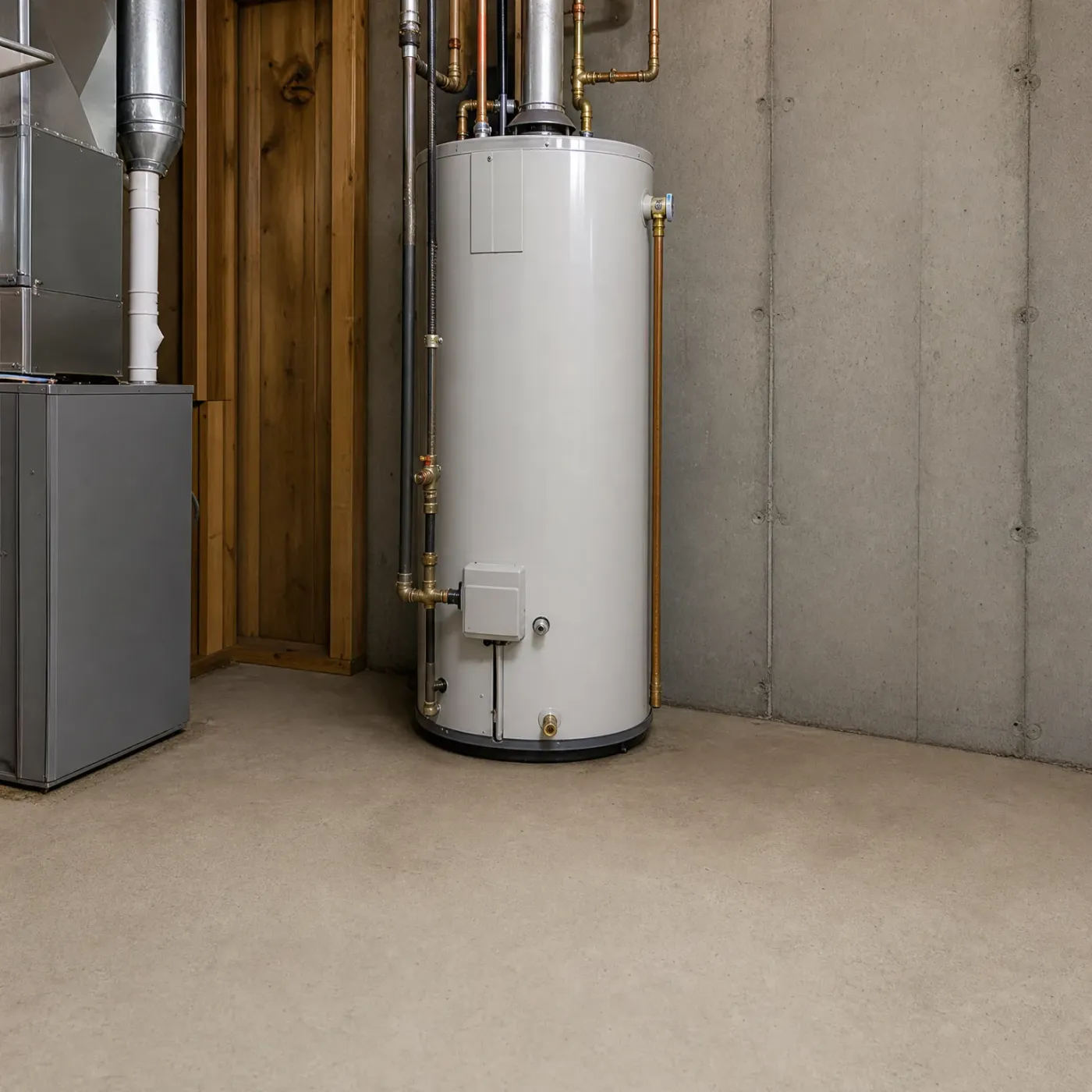
This is what a gas installation looks like done right: copper and black gas pipe run clean to the ceiling, tank set level, nothing improvised. No rust, no corrosion, no shortcuts on the venting.
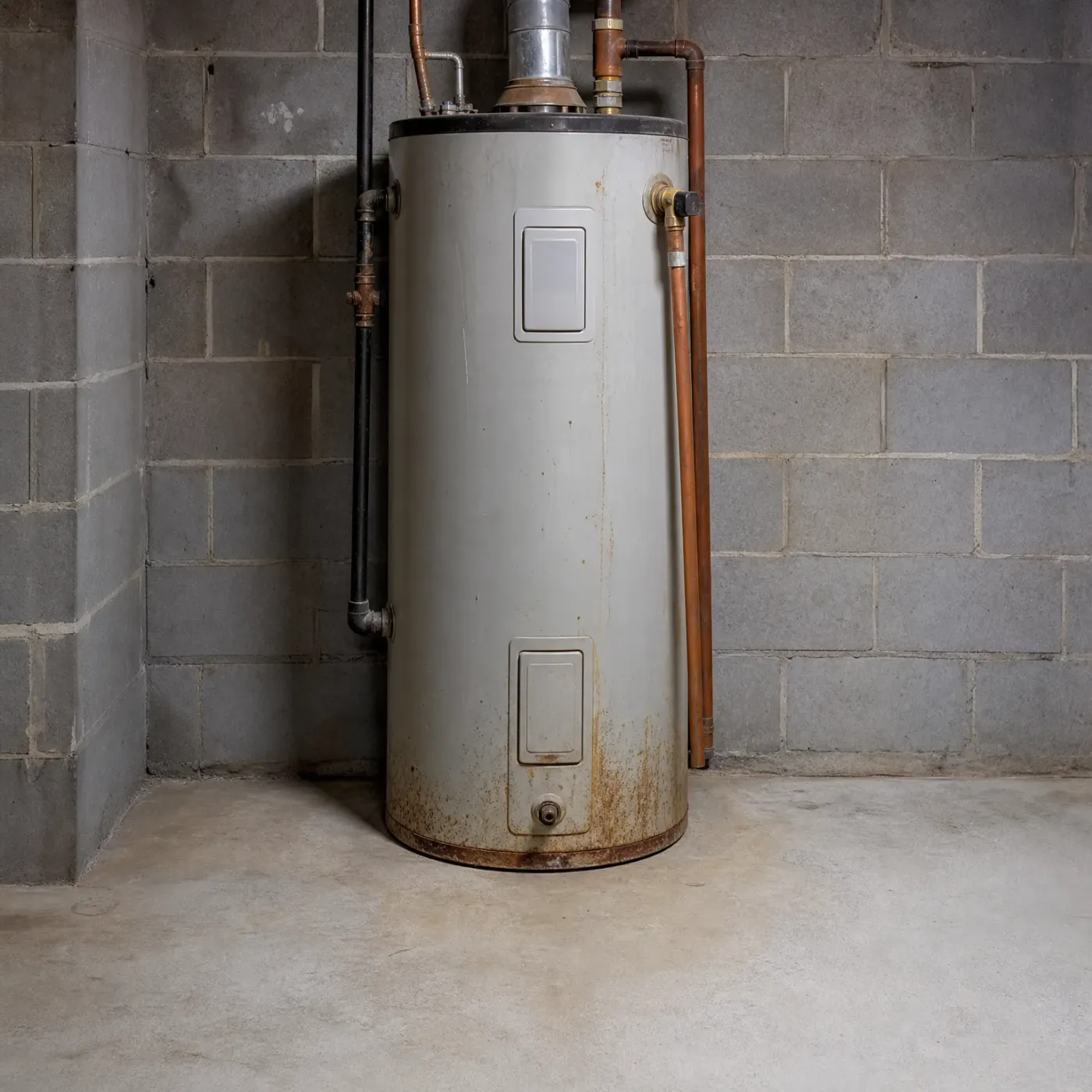
Rust at the base and along the seams means the tank is failing, not aging well. Once it's leaking there, it's not a repair. Whichever way you go next, waiting for it to fail completely is the one choice that costs you the most.

If your water heater runs on electricity now, staying electric is the straightforward path. The circuit is already run, there's no flue to add, and a new tank goes in without opening up the house to run gas line. Switching to gas is a real project, worth doing if you want the faster recovery, but it means a contractor confirming gas service, running line, and adding venting before the tank itself even goes in.
Either way, someone has to look at what's actually behind your wall and under your tank before the job starts. Finding that person is the part that takes the time: checking licenses, getting someone out to look, explaining the same situation to two or three contractors so you can compare what they quote. Send the form once and that work is off your plate. You'll know where you stand on electric versus gas without spending your evenings on the phone to find out.





One request and it's handed off
Skip the round of in-home estimates for a new water heater.
